vovat: (Bast)

I've occasionally been known to listen to religious radio, which can definitely be annoying, but is also an interesting window on another American culture. Just so long as they aren't playing music, because that stuff is boring as anything. Anyway, it still seems to be in common parlance about evangelical Christians that they want to convert everyone to their belief system, but I'm not sure I believe it. After all, they go about it in a profoundly ridiculous way, many of them constantly insulting people who don't share their beliefs. [livejournal.com profile] rockinlibrarian made a comment not too long ago that people have to WANT to be converted. I think that's largely true, but more than that, they have to already be somewhat attuned to that way of thinking. If you're going to come around to thinking that only Jesus saves from sin, you have to already accept that sin could be a real thing. To someone who doesn't believe in sin, you might as well be saying, "Only Jesus saves from invisible nose-eating butterflies." But it seems that many of these evangelicals are mired in the idea that everyone secretly believes in God and Jesus, and those who claim they don't are in futile teenage-style rebellion against the big guy. A common explanation for why seems to be that non-believers are totally in love with sin, which is somewhat ridiculous, as many of the actions considered to be sin wouldn't be enjoyable to anyone with a conscience. I don't need stone tablets written by the finger of a sky dweller to tell me that murder and stealing are bad ideas. That's probably why a lot of these believers focus on sins that aren't universally considered immoral, like premarital sex, extramarital sex, gay sex, protected sex, and pretty much any kind of sex that doesn't result in children who will potentially provide more money to the church. Modern conservative Christians are obsessed with the "family unit," largely defining it with rules devised in a time when women and children were considered property and no one was quite sure how reproduction worked. But it's in the Bible, so it MUST be true, sort of like the bit in Genesis 30 about how goats that conceive when looking at striped rods bear speckled kids. Oddly enough, these same people are quite often opposed to polygamy, which was accepted by the same society that made up a lot of the other sexual rules. So how come you can change your minds on that, but not any of that other stuff? For that matter, Jesus and Paul seemed to regard marriage as the lesser of two evils, so why are Christian churches so eager to promote it?

In addition to sexual sin, another major category emphasized by the radio preachers is what could be considered thought-crime. Apparently thinking about sin is just as bad as actually doing it. In fact, since Protestant denominations that accept the idea of salvation through faith alone hold belief in Jesus to be more important than anything else, aren't they essentially saying thought trumps action? To hear some preachers talk, thinking about something will automatically make you want to do it. I can't pretend I know how their minds work, but I know mine doesn't generally operate that way. In fact, isn't part of the beauty of the human brain that we can think things over before deciding whether or not to do them? Doesn't making certain thoughts off limits hinder this?
vovat: (Minotaur)

I was thinking today about fantasy movies, and of course The Wizard of Oz came to mind. Like a lot of fans, I'm not too keen on the "it was all a dream" ending, and Dorothy's conclusion before waking up that she shouldn't want to leave home again. It removes a lot of the magic from the adventure. This in turn led me to consider some comments I've seen on Oz forums throughout the years, and ponder the question of whether fantasy is dangerous. I recently made a sorta-joking comment on Twitter about how easy listening radio is intended to suck the life out of workers, and while I don't think there's any actual conspiracy going on there, I have to suspect there's a grain of truth to it. Is it the same way with fantasy? Are American workers not supposed to be dreaming of more majestic things, because it will give us ideas above our stations? Why work in a cubicle when you can imagine hunting dragons? I'm not saying this is a conscious thought on the part of the establishment, but I'm wondering if there's a subconscious element to it.


And while we're on the topic of control, what about religion? Karl Marx referred to it as the "opiate of the masses." A question I've pondered from time to time is why modern American conservatives are so big on Jesus, when he was a pretty radical liberal thinker for his time. One thing that comes to mind is that, while Jesus talked a good game, he also encouraged his followers to remain humble and not challenge the establishment. Probably a good idea in Roman times, considering what happened later with Simon bar Kochba's revolt, but also a good way for later Christian governments to keep the people in line. Oppressed? Don't worry about it! Just be patient, and things will be awesome when Jesus comes back! We don't know when that will be, but it'll be soon enough, right? Life is just temporary, while paradise is for eternity! I can see where old man Marx was coming from, you know? Of course, the countries that adopted communism just used Marx's own ideas to keep the working classes down, just like Europe had done with Jesus' radical notions. Funny how these things work.


Does fantasy have the same effect? After all, most fantasy that I've read, regardless of the author's political and religious beliefs, has more in common with Jesus than with Marx. It's rare to read fairy tales that actively encourage social revolution. And are we fantasy fans, as an essay I once read suggested, just waiting for the good fairy to show up and wave her wand instead of actually doing anything to solve the world's problems? Really, today's fantasy tales are often based on yesterday's mythology. Look at the Percy Jackson series, for instance. There's even fantasy based on modern religion, although perhaps it's too soon for believers to judge it based on its own merits rather than its position. Some (but by no means all) Christians who hate other fantasy works love Narnia, with C.S. Lewis' pro-Christian message. On the other hand, some of the same people are vehemently opposed to Philip Pullman's His Dark Materials series, which takes a more negative approach to Judeo-Christian mythology. Pullman himself is an atheist, but the universe of these books seems to me to be based more on Gnostic thought. I'm sure Pullman doesn't actually believe in angels, but they exist in his invented worlds. It's all fiction, after all. But considering there are people who are actually feel their faith confirmed by books with a talking lion and threatened by books with polar bears in armor, I'm not sure they all realize this. Harry Potter gets particular flak in this area, despite the fact that J.K. Rowling is a Christian, who's said herself that she believes in God and not in magic. The problem might be that her critics believe in both. Still, if you read some of the conservative Christian reviews of the Potter books and movies, it often seems like the Satanic panic is somewhat of a smokescreen. Perhaps what they're REALLY worried about is how they suggest that authority figures aren't always right, and there are times when it's not a bad idea to break the rules. Come to think of it, there might be some of that in Gnostic philosophy, too. The Demiurge claims to be the Almighty God, and perhaps even genuinely BELIEVES that he's God, but he isn't. Indeed, while we didn't see too much of this figure in The Amber Spyglass, what we did learn of him suggests he was somewhat misguided and naive, allowing Enoch to take advantage of him. This stuff fascinates me, but my point is that powerful conservative interests don't WANT people to think for themselves, and the idea that authority figures (perhaps even including God) can sometimes be wrong encourages just that. And we don't need that in our children, do we? If they ever go looking for their heart's desire again, they shouldn't look any further than their own backyards. Because if it isn't there, they never really lost it to begin with!


Wow, that was a lot more rambling and all over the place than I originally intended. I have a few other thoughts on related subjects, but I'll save them for future posts.
vovat: (Bast)

Essentially, Gnosticism is the belief that salvation is achieved through secret, mystical knowledge. While there are a lot of different belief systems that are considered Gnostic, the best known today was a response to Judeo-Christian tradition. One impetus for the philosophy is that, while God is thought to be entirely good, the world obviously isn't. I'm sure this way of thinking has led some to dismiss the idea of God altogether, the Gnostics instead posited that there was more than one god. Well, to put it more accurately, there is one perfect, transcendent, unknowable God, and one or more other imperfect divine beings that emanated from Him. It's one of these lesser beings who created the material world, which is why the place is so screwed up. This fake God is known as the Demiurge, and is often seen as the child of Sophia, the personification of wisdom (as seen in the Book of Proverbs). The Demiurge is sometimes considered merely misguided and other times actually evil. Either way, the material universe is more or less a sham, but people contain a spark of the truly divine that can enable them to escape it, by means of secret teachings. Gnostic Christians held that Jesus taught such secrets, and hence was an avatar of the true God, rather than of the Yahweh of the Old Testament, who would be the Demiurge in this scenario. In this philosophy, eating the forbidden fruit in the Garden of Eden was a good thing, which the Demiurge tried to prevent in an attempt to prevent mankind from escaping their material prison. Gnostic Christianity was largely stamped out by the early Church, but the fairly recent discovery of some Gnostic texts has helped modern scholars to learn more about their beliefs.


As I mentioned, however, there are some variations on Gnosticism. Not all Gnostics were Christians, and there is evidence of a pre-Christian Jewish Gnostic sect centered around Adam's son Seth. Some Gnostics stuck closer to mainstream Jewish belief by claiming that Satan, not Yahweh, was actually the Demiurge. The school has roots and parallels in other mystic religions and philosophies, like Buddhism, Kabbalah, and Plato's Theory of the Forms. I have to say that Gnosticism has a much friendlier face than most other religions. Instead of accepting the old standby that people are inherently sinful, it has an air of "no, we're not really that bad; it's just that the whole world is naturally flawed." And it reiterates the claim that there's something better beyond the world we know without having the need to reconcile this with a deity who's always advocating genocide and throwing people in Hell. On the other hand, it's not all-inclusive, as it presents the secret knowledge necessary for salvation and escape from materialism as only available to some. Still, I don't get the impression that they harbor any particular ill will toward the unsaved, as mainstream religions tend to.
vovat: (Minotaur)

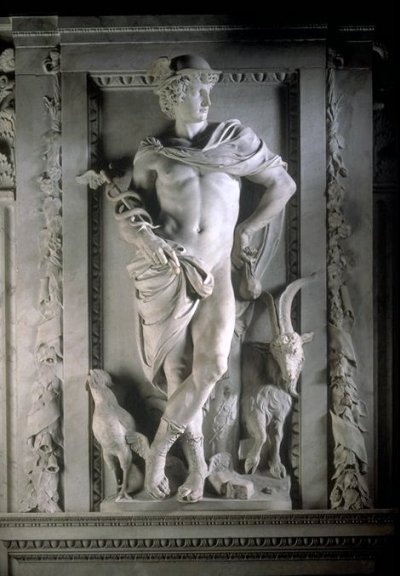
This week, my mythological post is on Hermes, the messenger of the Greek gods. Well, one of them, anyway. The rainbow goddess Iris was also regarded as a messenger. While best known for his message delivery, performed with wingéd sandals at the speed of...well, something fast, he had several other functions as well. He was the guide of souls to the world of the dead (which is presumably why he, rather than Zeus, tended to be associated with the Norse Odin), as well as the god of travel, trade, commerce, and thieves (and anyone who has any familiarity with business news will understand that those things go together better than it might look at first). In his youth, he invented the lyre and stole his half-brother Apollo's cattle. Many myths concerning Hermes involve his assisting heroes with their quests. The messenger god was also an accomplished athlete, credited with inventing foot-racing and boxing. I'm inclined to think sports that simply consist of running or punching can't really be said to have a single inventor, god or not, but don't tell Hermes that.


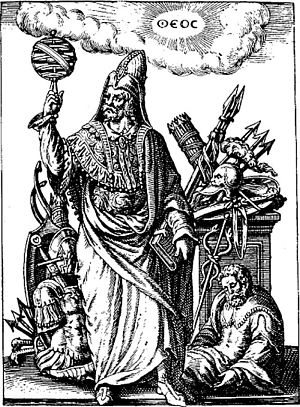
It was presumably around the time the Greeks conquered Egypt that the idea of Hermes Trismegistus, a sort of amalgamation of Hermes and the Egyptian Thoth, was first conceived. The Greeks had a tendency to identify the gods of other lands with their own, and Hermes and Thoth were both associated with writing and magic. The Hermetic writings that were attributed to the amalgamated deity included both philosophy and pseudo-scientific magic, including alchemy and astrology. These writings were popular in the Middle Ages and the Renaissance, but lost status when analysis revealed that they weren't as ancient as previously thought. The modern New Age movement, however, has apparently revived the idea that the writings date back to the time of the pharaohs. Hermeticism is just like any other trend, I suppose. Just when you think it's gone for good, it resurfaces stronger than ever.


It isn't only through occultism that Hermes and his Roman equivalent Mercury live on, however. I've seen the god's image used for various delivery services, and he apparently remains the symbol of the Greek post office. The words "hermeneutics" derives from his name, while Mercury is the namesake for both the planet closest to the Sun (and hence the fastest in its orbit) and the lethal liquid metal once commonly known as quicksilver. And I'm sure the geeky writers of Futurama were aware of the mythological connections inherent in a character named Hermes managing a delivery company, hence calling to mind the functions of the mythological figure as both messenger and god of commerce. I seem to recall hearing that the character originally had a different name and wasn't Jamaican. So is Hermes actually a common Jamaican name, or will that not be the case for another several hundred years?
vovat: (Bast)
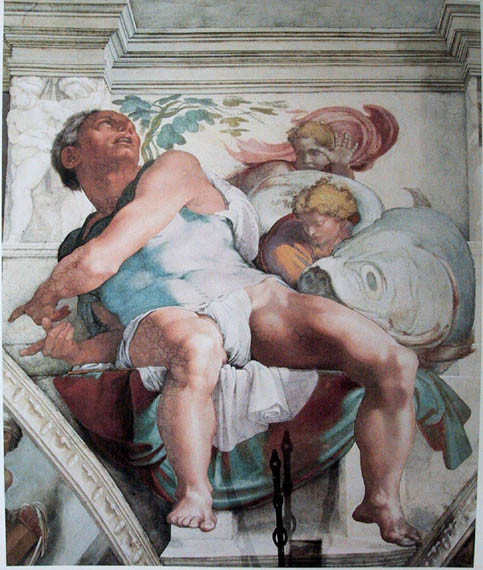
As I'm sure we all know, the Bible is full of prophecies that never came to pass. Apologists can really get their knickers in a knot trying to find excuses for these, including that the prophecies actually meant something other than what they literally say, or that they have yet to be fulfilled. One explanation I've found that actually seems to be more internally consistent, however, is that the prophecies are really warnings, and can always be prevented if the people shape up. A good example of this is in the Book of Jonah, in which the prophet tells the people of Nineveh that the city will be overthrown in forty days. The citizens repent, however, and God spares them. It seems pretty obvious that this story was never intended to be regarded as literally true, not least of all because the historical Jonah (if 2 Kings 14:25 is to be believed, anyway) lived at a time when Nineveh was still a small village. And even at its height, why would its inhabitants have believed a prophet from a religion that they didn't follow? I do think, however, that Jonah was meant as an illustration of how God operates. While the Bible is rarely consistent on any matter, it does give the impression that the ancient Jews weren't as fatalistic as other contemporary societies. They might well have had some concept of destiny, but for the most part the future is not written in stone, and God can change His mind depending on mortal behavior.


Now, the New Testament, which contains heavy Greek influence for obvious reasons, we might see some more hints of future events being predetermined and unchangeable. I'm not going to look through the entire Testament for references for and against that idea right now, but one that does come to mind is in Revelation 13, in which we're told that the names of the saved were written in the Book of Life "from the foundation of the world." Well, that's one possible reading, anyway, and the one that the Protestant denominations that believe in predestination apparently choose to accept. Whether you're going on to salvation or burning in the lake of fire is something that's been decided since long before you were born, which kind of makes me wonder why God would bother making people whom He knows He's just going to destroy eventually anyway. I suppose the question of whether or not people have free will is purely philosophical and academic, since even if we don't, we operate under the illusion that we do. So, in essence, whether or not the doctrine of predestination is true is essentially irrelevant to how a person lives his or her life. I would imagine, however, that believers in that doctrine pretty much always accept the idea of God as someone with a personality and emotions, by which token the whole idea of unchangeable fate seems cruel and pointless. That's quite likely why ancient Greek religion had the Fates operate independently of the gods.
vovat: (Polychrome)

As I mentioned in my last proper post, belief in elementals has persisted over the centuries, and one philosophical system that included such belief was Theosophy, an occult movement founded by Helena Petrovna Blavatsky in the late nineteenth century. So what, exactly, did Theosophists believe? Well, I can't be entirely sure, as Blavatsky and her followers were apparently fond of the typical occult trick of making things seem mystical by writing about them in convoluted ways. At its heart, it seems to be a syncretic belief that all religions contain some truth, and many different cultures had Adepts who were skilled at discerning spiritual truths about the universe. It incorporates elements from many different religions, as well as folklore and philosophy. The great chain of being, multiple lives of souls, history being cyclical, and humans evolving from weird proto-human creatures were all parts of Theosophy; as were the lost continents of Atlantis, Lemuria, and Hyperborea. In other words, it was sort of a catch-all with some new ideas added in. Blavatsky believed in the consciousness of the entire universe, and the elementals were basically the conscious spiritual forms of various natural forces. She wrote, "Under the general designation of fairies, and fays, these spirits of the elements appear in the myths, fables, traditions, or poetry of all nations, ancient and modern. Their names are legion--peris, devs, djins, sylvans, satyrs, fauns, elves, dwarfs, trolls, norns, nisses, kobolds, brownies, necks, stromkarls, undines, nixies, goblins, ponkes, banshees, kelpies, pixies, moss people, good people, good neighbours, wild women, men of peace, white ladies--and many more. They have been seen, feared, blessed, banned, and invoked in every quarter of the globe and in every age. Shall we then concede that all who have met them were hallucinated?" Yeah, pretty much the same basic argument that the alien astronaut theorists use. "A lot of people have reported seeing kind of similar creatures, and you can't prove they AREN'T real!" It doesn't hold a lot of water (or undines, for that matter) when you get right down to it, but I can see the appeal.


One known member of the Theosophical Society was none other than my favorite author, L. Frank Baum, which is largely why this kind of thing interests me in the first place. There have been some studies on how Theosophical beliefs affected Baum's writing, with this page detailing some of them. Honestly, I think most of the references are more subtle than people like the compiler of said page prefer to think, but there are some significant similarities. Baum refers to Adepts in Glinda of Oz, and to the ancient Greek idea of demons being spiritual guides in The Master Key. And yes, the idea of elementals appears here and there as well, most prominently in Baum's own Nomes, described as "rock fairies" and "underground elves." The idea of underground creatures capturing humans, as occurred in many of Baum's own Nome stories (the royal family of Ev in Ozma, the Shaggy Man's brother in Tik-Tok, the King and Queen of Pingaree in Rinkitink), is a common one in fantasy, what with gnomes kidnapping a human girl in Zauberlinda the Wise Witch (a book that owes much of its style to The Wonderful Wizard of Oz, and which Baum himself quite possibly borrowed from in turn) and George MacDonald's princess-napping goblins. Still, I think the idea that Nomes are the keepers of rocks and gems ties Baum's creations in with the elemental concept. One of the first mentions of the Gnome King (Baum hadn't yet changed the spelling at this point) was in The Life and Adventures of Santa Claus, in which he's one member of a council of immortals that watches over various aspects of nature. This council also includes the Queen of the Water Sprites and the King of the Wind Demons, and later books set in the same expanded universe bring in sea and sky fairies, the former being the mermaids of the book simply called The Sea Fairies, and the latter including the Daughter of the Rainbow. It doesn't seem like he really involved fire fairies all that much, though. I believe The Annotated Wizard of Oz suggested a connection between Tititi-Hoochoo's subjects from Tik-Tok and fire, presumably based on the fact that the ruler's title is the Great Jinjin, and jinn are associated with fire. Aside from one of the maidens attending the Queen of Light being named Firelight, however, I don't really see this. Also perhaps somewhat telling is that one of Button-Bright's many middle names is Paracelsus.


If I remember correctly, the nasty Wizard of Oz from Wicked was a direct follower of Blavatsky, and was perhaps intended to highlight some of the less palatable aspects of Theosophy. Gregory Maguire's Wizard rules Oz as a Hitler-like dictator, and the superiority of the Aryan race was espoused by Blavatsky. She did not advocate genocide, instead assuming that the Aryans would simply be favored by natural selection, but Theosophy was cited as an influence on the founders of the much more blatantly racist Ariosophy. Blavatsky's teachings included something about the Aryans originating on Atlantis and eventually being replaced themselves by the sixth root race, a far cry from gassing Jews in concentration camps. In other words, I guess you could say it was an example of RACIAL thinking, but not necessarily RACIST thinking. Still not good, of course, but I have to suspect from the admittedly little I've read about her that Blavatsky wouldn't have actually supported the Wizard's systematic persecution of talking animals.
vovat: (zoma)
Although there's some debate on this point, the main theme of the Book of Job seems to be the age-old theological question of why, if there truly is a guiding force at work in the world, bad things happen to good people. Much of the Old Testament holds to the idea that good works and piousness are rewarded, while bad works and heresy are punished. But even back when the Bible was written, people would have realized that not all good and bad fortune can be so easily explained. Job is tested by being afflicted with physical pain and the loss of his wealth and children, and his friends insist he must have done something wrong, but Job's eventual conversation with God (who appears in a whirlwind or a cloud) gives the impression that mere humans can never really know why God deems it necessary for bad stuff to happen. Still, if you have faith, things will work out all right in the end. Sure, you'll lose your kids, but you'll end up with new and better ones! Okay, so that part probably wouldn't appear if a similar book were written nowadays, but the belief that there is some kind of reason for all the crap that occurs still holds true today. Even those of us who don't believe in gods tend to cling to the ideals of justice and compassion, even though those also don't always work out.


Job is said to have lived in the Land of Uz, which I believe is actually the name that the most recent Hebrew translations of the Oz books use for that fairyland. It's not entirely clear where Uz is, but evidence elsewhere in the Bible suggests that it might be a name for what would eventually become known as Edom and Idumea. Since there are no mentions in the book of the Jewish people or the nation of Israel, it's often regarded as taking place in the time of the patriarchs of Genesis. There's also a tradition that Job was Egyptian, and either a king or an advisor to one. And other local interpretations have placed Job and Uz closer to the interpreters' homes (funny, that). I think the chances are that Job was never intended to be a historical figure, but simply a character in a fable. As someone who likes verisimilitude in my fiction, however, I can appreciate the attempts to locate the setting of the book.

Finally, on an unrelated note, happy birthday to [livejournal.com profile] vilajunkie!
vovat: (Default)
I'd been meaning to say something about The 40-Year-Old Virgin, which I'd watched last week, but I didn't get around to it until now. The movie wasn't terrible, but like [livejournal.com profile] bethje mentioned, I didn't care for Steve Carell's character selling his toys as a metaphor for growing up. Sure, if you play with toys instead of working, that's one thing, but this character did his job, even getting a few promotions during the course of the film. So why can't he indulge his youthful side while at home? I have to say I'm a fan of C.S. Lewis' take on 1 Corinthians 13:11: "When I became a man I put away childish things, including the fear of childishness and the desire to be very grown up." I know a lot of adults who play with toys and video games, and they're hardly all irresponsible. I was also reminded of this by a recent episode of Real Time, in which Bill Maher said something about American society being immature because we consider Harry Potter to be literature, and Batman movies to be...well, I forget his wording, but the gist was that we think they're deeply philosophical. But really, why ISN'T Harry Potter literature? No, they're not the greatest books in existence, but that's largely subjective anyway. Just because the main characters are kids and they're written so kids can understand them doesn't mean only kids can read them. Besides, Danielle Steele novels and Farrelly Brothers movies are allegedly made for adults, but are they really more sophisticated than J.K. Rowling or DC Comics? Hey, the previous episode of Real Time had Maher chatting with Ron Howard about Angels and Demons, and telling Cameron Diaz that he liked her in The Mask. Not to mention that, as my wife mentioned, he's a guy in his fifties who still identifies himself as a pothead. But, you know, he's too mature to enjoy superhero movies. I guess that, just like everyone, Maher has his own blind and hypocritical spots. And getting back to the movie industry, if they're selling the idea that adults being interested in toys and games is incompatible with growing up and having serious relationships, then why do they keep cranking out films based on stuff like the Transformers and G.I. Joe?

Speaking of stuff made for children that adults have also enjoyed, we also watched Monsters, Inc. for the first time. I think it was still relatively recent when we put it on the Netflix queue, but there are a LOT of items on there. Anyway, I enjoyed it. I thought it did a good job of creating the monster world in an hour-and-a-half movie, complete with complex but cute designs and an explanation as to WHY monsters would hang out in closets and scare children.

All right, I guess that's all for now.
vovat: (Default)
I've seen people say things about celebrities dying in threes, but which three are we counting at this point? Farrah Fawcett and Michael Jackson dying the same day is an eerie coincidence (although it would have been more so if the two of them had anything to do with each other), but did a third celebrity die that day? People want to make it Ed McMahon, but he died two days earlier, so I'm not sure why he would count as part of the trio. This site mentions that Sky Saxon of the Seeds died on the same day as Farrah and Michael, but I know I hadn't heard of the guy while he was still alive. I did know about Billy Mays, but I'm not sure how widely he'd be considered a celebrity, and his death was three days later anyway. So, as creepy and disturbing as it is to see so many famous people dying, I don't think there's any pattern in it.

I've also seen complaints about how people talking about dead celebrities is taking the place of real news. I guess my question there is who defines "real news." I guess they mean stuff like who won the football game and whether any morons are sending in teabags with their tax returns, right? I don't know; I also get annoyed when the same story is covered for days on end, but I think what's important is a subjective thing. That said, I think news is supposed to be about things that happened, so making guesses about what's going to happen to Jackson's estate doesn't really count. On the other hand, it's not like discussions of, say, the war in Iraq DON'T include a lot of guesswork. In a world as rich and event-filled as ours, do the media really need to cover the same topics over and over again? Also worth noting (and it has been many times, but I'm still going to reiterate it) is how the prevailing attitude of not speaking ill of the dead is definitely coming out with Michael, whom no one seemed to mind speaking ill of in the recent past. I guess death has a tendency to make us think of what we liked about a person, rather than what we thought was creepy.

So, in conclusion, death sucks. Actually, that's not a conclusion at all, but it's still true. Yeah, I know it relieves some people of their pain (well, unless you believe in eternal torment in the afterlife), and some deaths could be argued to be no big loss to the world, but I think these are the exceptions. It's frightening to think how easy it is for the life of someone you know to just end. And I don't believe in an afterlife; I consider death to be the end of the existence of the individual person. As I've said before, even if there IS such a thing as a soul, why would it carry on the personality of its last host? Isn't that a product of the brain, which is part of what stops functioning when you die? Is that a bleak idea? Well, kind of. I know the prospect of consciousness simply ceasing is rather disturbing. But isn't it even bleaker to never enjoy the life that you KNOW exists in hopes of having it better in one that might or might not exist?
vovat: (Cracker)
[livejournal.com profile] bethje has remarked on occasion that the two of us are more best friends than anything else, which I guess is kind of true. When we'd only been dating for a few months, people compared us to an old married couple. I'm pretty much resigned to the fact that I'm not an exciting person to be with. I'm mostly just reliable, and I don't hear anyone saying that reliability is what they're looking for in a partner. I guess it's a good thing, but it isn't something anybody is really attracted to. I've always been clear that what I most desire in life is contentment, and I suppose I try to provide that as well. Is it weird for a married couple with an average age of thirty to be more close friends than anything else? Isn't that usually something that happens some time down the road?

What's kind of weird is that I'd wanted to get married for a while, yet I don't think marriage really has much meaning. Neither of us are religious, so we don't have the concern about being legitimately together in God's eyes. (And really, if I WERE religious, I doubt I'd think the Almighty would be that petty.) I wasn't really giving up my bachelorhood, because I'd never dated anyone else anyway. And for that matter, I don't even think marriage has to be about monogamy. I don't want to have an open relationship, but I don't really have a moral objection to the idea, either. It's more than I wouldn't want the complications (and I don't think anyone else would be interested in me anyway). It's more that I like being married because it means something to other people; saying "my wife" sounds more impressive than "my girlfriend," even if our situations were the same before and after the wedding. And, of course, there are the legal benefits of being married, like being able to share in my wife's health insurance. Honestly, I feel like giving special benefits to married couples is pretty ridiculous on the part of the government. I have to wonder if conservatives are so intent on preserving "traditional marriage" not just to pander to the Religious Right, but also because it saves money. If you can, for instance, limit the people with which someone can share health benefits to a spouse and children, that means less people for the insurance companies to cover.
vovat: (zoma)
I had a dream that I was attending a reunion of the Honors College. There actually was such a reunion before, but I didn't go. Anyway, in the dream, I ran into people I knew from college, and they were nice, but didn't want to talk to me very much. I kind of felt like I didn't really belong, except at the time when everyone started singing the Sesame Street theme for some reason. I think the whole thing was a reflection on my actual college years, and how I felt like I was generally liked, but still somewhat of an outcast.

This conveniently relates to a topic that I wanted to discuss, which is that of individualism and society, and how they relates to human belief systems. In the third part of the epilogue to The Hero with a Thousand Faces, Joseph Campbell writes that, "for the democratic ideal of the self-determining individual, the invention of the power-driven machine, and the development of the scientific method of research, have so transformed human life that the long-inherited, timeless universe of symbols has collapsed." [livejournal.com profile] rockinlibrarian has written recently about how modern society fears death, and no longer shows respect to the dead as many ancient cultures did. I think this might be related, in that someone who thinks of himself or herself more as part of a larger group than as an individual might not be as concerned with his or her own death, as long as the society as a whole survives. That kind of thought still exists, but perhaps it isn't as common in an era of individualism, because death is certainly the end of the individual person. People claim that you can live on through your works or your children, but that's not really living on in the purely technical sense, as you're not there to see it. Sure, it would be cool to be remembered for something I've done, but even if I were to create something immortal (which I don't think will happen, mind you), that wouldn't make ME immortal. And in a way, I kind of fear that the people who want to live on through their children are the ones who will try to force those kids to follow in their footsteps. Nobody really lives on through their children, because those children are their own individual people.

Some say that religion can remove fear of death, but it obviously doesn't always work, as very religious people tend to be just as afraid of dying as anyone else. I think part of that might be because, even if you believe in an afterlife, it's still not life. Whether you think you're going to Heaven, Hell, or anywhere in between, you're no longer going to be taking part in events in your day-to-day life on Earth, and such a change is scary even if you believe it'll be for the better. We're reluctant to give up what we have in life. I don't know. I don't think I'd want to live forever, but the idea that death can strike at any time is a frightening one. But then, I'm not sure I'd want to know when I'm going to die either, because then I'd just keep dreading it like I do other unwanted future events.

According to Campbell, the society of which we should now see ourselves as part isn't a tribal or national group, but the world as a whole. I consider that a goal to which we can all aspire, but I'm sure many people don't want to.
vovat: (Minotaur)
For the past few Sundays, I've been writing about stuff I came up with as a kid. While I know I haven't covered everything yet, I don't currently have any memories that I think I can stretch into a full post. That doesn't mean I won't have more posts of that sort in the future, though, so don't despair. Also, there won't be any Simpsons, Family Guy, or American Dad reviews, since those shows aren't on tonight. Yeah, we're going to get another Simpsons Halloween episode after Halloween. I'm not sure why, if they knew they weren't going to air a new show this week, they didn't just put the Halloween one on last week. It's not like they don't show Christmas episodes well in advance of the actual day.

Like [livejournal.com profile] rockinlibrarian, I recently finished reading Joseph Campbell's The Hero with a Thousand Faces. I'd never read it before, despite the fact that I've always been interested in mythology and that my dad owned a copy, but I finally checked out a copy from the library. I wasn't always that interested in the psychological parts, as it seemed to mostly reflect the ideas of Freud and Jung, which I always found rather far-fetched. I did, however, like the exploration of the similar themes in the mythologies throughout the world.

One passage I found particularly interesting was this one, from Part II, Chapter I: "The arranging of the world, the creation of man, and the decision about death are typical themes from the tales of the primitive creator. It is difficult to know how seriously or in what sense these stories were believed....Many of the tales that appear in the collections under the category of origin stories were generally regarded more as popular fairy tales than as a book of genesis." I do have to wonder how much people actually believed some of the more absurd myths. I'm sure there were people who did, just as today there are people who think the first human was literally made of dirt and fossils were the result of a worldwide flood. What immediately comes to mind are the Mystery Cults of Imperial Rome, like that of Mithra, where those who were initiated into the mystery were the ones privy to the truth behind the stories. As a non-religious person who's fascinated by mythology, it kind of seems to me like there are two different sorts, which are almost opposite in a way. One is making grand cosmic concepts into everyday symbols, and the other is finding mystical concepts behind more or less generic things. That's really oversimplifying it, but I'll try to explain what I mean. The former is when someone wonders about, say, the nature of the Sun, and says something like, "Hey, the sun looks kind of like an egg yolk. Maybe a giant bird lays the sun every day!" The Sun is outside this person's realm of knowledge, but they see eggs all the time. Does the person who comes up with this concept actually believe it, or just think it makes a good story? I don't know, but I would imagine it varies. The other kind can be exemplified by the story of Jesus. While we don't know for sure that he existed, his story (especially as told in the Gospel of Mark, which lacks the virgin birth and only hints at the resurrection) is pretty believable. We know that there was a time in Judea when there were people trying to reform Judaism, and being scorned by the establishment and sometimes even killed. The mystical notion here isn't simply that a religious leader was crucified, but the symbolism added to this, in which Jesus took on and paid for all the sin of the world, and came back to life after dying. To put it another way, my former sort of mythology is deciding that a tree holds the world together, while the latter is to come upon a naturally occurring tree and state that it IS a world tree. I think the latter variety is more commonly believed today, and perhaps has been throughout history.

To Campbell, and to some others I've seen address the topic, what's really important are the deeper truths behind the myths. I'd say those are easier to find in some stories than others, though. I mean, I can see the intended meaning in the Garden of Eden story, even if I don't necessarily agree with it. With Noah's Ark, though, it's a little more difficult to fathom. But then, some people think that story might be based on memories of an actual flood (perhaps of the Black Sea) that a few people survived by building boats. If this is true, it's not so much a tale meant to explain why things are the way they are (although there is some of that mixed in, like with the explanation of the rainbow), but more along the lines of the real (or at least possibly real) event being modified into a myth. That would make it fit more easily into my second category, but I'll admit that these categories aren't very rigidly defined.
vovat: (Bast)
Ancient and modern religions both tend to be quite anthropocentric. A lot of them teach that humans are special, and that the gods themselves are more or less human in form. I remember reading in college about the Greek philosopher Xenophanes' idea that, if horses or lions could draw and sculpt, their gods would have the forms of their own species. That makes sense to me. Of course, there ARE some animal gods that human societies have worshiped. The ancient Egyptians had quite a few deities who were animals, or at least had the heads of animals. Caesar Augustus was said to have sneered at this, saying that "Romans worship gods, not animals."

The creation of mankind is generally an important part of any myth cycle, and it's usually separate from and more significant than the creation of animals. It's also typical for raw materials to be involved. According to the Norse myths, the first humans were made from an ash and elm tree. I believe I've heard of others where people were made from corn, and of course the Bible reports that Adam was made of dirt. I've never been entirely sure why fundamentalists object so highly to the idea that they were descended from monkeys (not that that's what the theory of evolution actually says, but that seems to be what a lot of them think), yet have no problem with their ancestor coming from dirt. I mean, it beats coming out of a giant's armpit, but if I had my choice of what I wanted my ancestors to have been, I'd probably choose chimps over soil. But then, the fundamentalists also want humans to believe that we have dominion over the Earth (which is part of why we shouldn't worry about global warming or endangered species), yet we're also all filthy sinners. I'm not sure why we're supposed to be higher than animals, when they're apparently not sinning (although some of them are allegedly "unclean" due simply to what sort of animal they are). I guess the explanation would be that humans have the ability to overcome their sin, while animals lack the brainpower to do so. Personally, I don't buy that people are inherently bad, but I don't know that we're inherently GOOD, either. I think we're inclined toward compassion and altruism, yet we're also quite selfish when it suits us (and sometimes even when it doesn't). I'm hardly an expert on human nature, but I think we all the capacity to do what would be considered both good and evil.

In some ways, I have to say I like the Hindu belief in reincarnation, which seems less wasteful than the idea of souls going to some mystical realm for all eternity. Instead, they're recycled, and souls can belong to both humans and animals. I believe that there's still an idea that humans are higher, and that being reincarnated as an animal is a regression, but it still suggests that humans and animals really aren't that different.
vovat: (Zoma)
I know I've been making a lot of Culture Warrior posts recently, but some of you DID ask for it. I've now caught up in my posts to the point where I've actually read, and there are only three chapters left. I think I'll try to hold off on them for a little while, since I feel like I've been inundating your friends pages with these entries. Besides, I'm going to be pretty busy for the rest of this week.

Chapter Twelve of Bill O'Reilly's book starts out with him mentioning that the conservative Christian groups are the most vocal proponents of his side, but he thinks that isn't enough. He writes, "In order to stop the S-P movement cold, nonreligious Americans have to be persuaded that traditionalism is in their best interest." So people who aren't Christians or Jews should adhere to a philosophy based on "Judeo-Christian values"? How would O'Reilly like it if some other religion he didn't believe in tried to get him to accept THEIR values? But I guess it's worth it to avoid a country in which you can practice any religion you want as long as you don't force it on others! Oh, the HORROR!

The next paragraph has Bill arguing that a socialistic system "is impossible, especially in a land of 300 million people, but the S-Ps will never believe that." Then, in the one after that, he says, "The secular-progressive dream is not an impossible one for them to achieve." Um, would you mind MAKING UP YOUR FRICKIN' MIND? The anti-socialism paragraph also says, "If they gain power, your assets will become their assets." Seems like it would be the opposite for poor people, but I shouldn't be surprised that he doesn't think any of THEM would read this book. Unfortunately for Bill, I checked the book out from the public library, which people of all different income levels are allowed to use. And, well, maybe total socialism ISN'T practical, but why does that mean we shouldn't make ANY movements in that direction?

O'Reilly also takes on European "relativism," under which "even heinous acts can be explained, so they should not--in fact, they cannot--be condemned." Great cornstalks, this guy makes so many straw men he could start his own scarecrow factory! When I was in college, I considered myself a moral relativist, and was rather surprised that both of the philosophy professors I had were self-styled absolutists. I've thought about the subject many times since then, and I now tend to think that no thinking person can really be a TOTAL absolutist or relativist, because some morals are universal and others situational. Does O'Reilly really think there's nothing that's right at some times and wrong at others? Elsewhere in the book, he's implied that he thinks the rules should be different in time of war, and that American citizens should be treated differently from illegal immigrants. Aren't those relative morals in their own ways? But I guess they're OLD-FASHIONED relative morals, which makes them okay for traditionalists. And really, if O'Reilly actually thinks that Europeans believe "no definite judgments about behavior should be made," then I challenge him to show me a European nation where murder is acceptable.

And guess what else comes up in this chapter? Gay marriage! He says he's not actually opposed to it, but that "gay marriage has an impact on straight marriage." Um...would you mind explaining how? Apparently he WOULD mind, because all he really says is that "American society is built around the traditional heterosexual home." Also, "there is no question that having a mother and a father is what Nature intended." That's funny, because I've heard that humans are naturally polygamous. I could possibly even suggest that a certain married man's sexually suggestive comments involving Middle Eastern cuisine to another woman could be indirectly due to his biological urge to spread his seed to more than one female. But that would be a cheap shot, wouldn't it? And, from what I hear, some animals are gay. Besides, how can Nature (with a capital N, no less) "intend" anything? Does he believe it's a conscious force? Is it more like MOTHER Nature, or like the idea that God and Nature are the same? I'd normally dismiss that as metaphor, but it's hard to do that when he's trying to make a moral point. Not to mention that he says he's not opposed to gay adoption because "kids raised by gay parents usually turn out the same way children in traditional homes do," yet specifies that he favors "allowing children consigned to foster care to live in a gay home when no other alternative is available." Um, if the kids turn out the same either way, why include that "no other alternative" part? Maybe he's like Giuliani, and doesn't always agree with himself. Wrapping up the gay part (sorry, nothing at all titillating is involved), he claims that "traditional warriors do not base their philosophy on bigotry." He's not bigoted; he just believes that some people should be treated differently from others just because that's how it's always been done. They're TOTALLY DIFFERENT THINGS! :P

Looking ahead a little bit, I see the chapter after the next one is called "Hating America." Ah, THAT sounds like it will be rational and well thought out, doesn't it? {g}
vovat: (Bowser)
Penn admitted that he and Teller were kind of slacking off with the latest Bullshit! episode, and it did seem that way. It was about the weird beliefs that some people have about dolphins, like that they can communicate telepathically, heal people, and assist in making significant life decisions. As you can guess, they didn't have to do all that much to debunk these beliefs. I did, however, find their claim (which I assume is true) that dolphins kill porpoises for no real reason to be interesting, if disturbing. Also, I hear that Ecco the Dolphin is an incredibly hard game, even harder than BattleToads.

Another New Age sort of thing that [livejournal.com profile] bethje and I looked up last night on a whim was The Secret, one of the latest additions to the vast array of books on the power of positive thinking, and all of the metaphysical mumbo-jumbo that goes with it. Apparently our thoughts and feelings produce vibrations in the Universe, which then brings the things we desire to us. According to this guy, "we have an absolutely unlimited power within us," which I guess means that we can, say, fire lightning bolts from our fingers if we want it enough. The fact that no one (at least as far as I know) can do this is a result of our negative thoughts and emotions. And since we attract bad things to ourselves via negative thinking, I suppose homeless people, rape victims, and people in the World Trade Center on September 11th only have themselves to blame. And Oprah, who was molested, is promoting this philosophy? To say that this is disturbing is putting it mildly.
vovat: (Polychrome)
For my semi-philosophical discussion of the unspecified time period, I'd like to address the question as to whether there's any such thing as objectively good art. I have to say that I don't think there is, but I also don't think it's totally just an issue of each person's own taste. I make a distinction between "I can see why some people like this, but I'm not among them" and "ye gods, this is BAD." And there are plenty of things I like, but don't think are exactly High Art. But I think all of these things are also subjective. There is, however, the caveat that there are certain things audiences (at least in our own culture) have come to expect. When watching a movie or reading a novel, we expect a coherent plot and identifiable characters. With a song, we expect a melody. Looking at a painting, we expect to know what it is. That's not to say that there isn't good art that doesn't fit these expectations, but I think it tends to be more controversial. There also seem to be some people who tend to like things simply because they DON'T fit expectations, dismissing the masses who don't like them as philistines who just don't understand. Putting aside the fact that the Philistines appear to have been the most advanced culture in the region at the time of the Davidic kings, there have been times when I've been one of these elitist sorts, but others where I think, "No, the masses are right. This DOES suck." I do think there's a bit of popular prejudice against anything that you have to think about, but maybe that's just my subjective opinion. I also might posit that there are certain things that are generally viewed as bad because they're offensive, but with all the popular movies out that are blatantly sexist or otherwise prejudiced, perhaps this isn't even the case. And sometimes offensiveness can be used in an artist's favor, but this requires the person to KNOW that it's something offensive. I think part of the problem with, say, the "Hey, aren't fat people funny?" stuff that Hollywood is churning out nowadays is that the creators don't even acknowledge that they're being offensive.

Along with this, there seems to be a conception among some people that popular entertainment is bad. This comes from different segments of the population--I don't think the kids who only want to listen to indie music are the same as the stuffed-shirt academics who dismiss popular literature--but it strikes me as basically the same kind of prejudice. Yes, a lot of what's popular is (or at least appears to be) really crappy, and I have no clue what its appeal is. But that's probably even more true for most unpopular stuff. I can't really buy the distinction between what's viewed as High and Popular Art, anyway. After all, most Classics gained that status because they're popular, or at least were at one point, right?

And speaking of popular things that suck, I'm glad that my wife has no intention of dragging me to the Sex and the City movie, as she hates it more than I do. I'm not sure why anyone would drag someone else to a movie they don't want to see anyway. Sure, I've gone with people to see films I probably wouldn't have seen otherwise, but nothing I was dead set against seeing, you know? I think a lot of people still have the idea that they can't go to the movies alone, even though a dark room where you have to be quiet is hardly an ideal place for social interaction. I really don't much like going to concerts alone, but that's not to say I haven't done so several times.


And here's the survey that [livejournal.com profile] rockinlibrarian did, to which I alluded in my last post. I always tell myself I probably shouldn't do any more of these, but then I always come across questions I actually want to answer. The unfortunate thing is that they're always packaged with questions that I've already answered a bunch of times, or ones to which I can't think of decent answers. Oh, well. Here we go. )
vovat: (Default)
For today's pseudo-philosophical entry, I'm going to offer a few of my thoughts on diet, specifically in regards to eating meat. I'm sympathetic to a fair number of animal rights causes, but I've never had any real qualms with eating meat. Sometimes I wonder if I should, though. I can certainly say I have respect for people who can get by without eating meat, because it just seems like so much work to me. I like meat, but I don't LOVE meat like some people do. I believe I've said before that the things I'd miss most if I suddenly decided to switch over to a vegetarian diet are ham sandwiches and Chick-fil-A. Oh, and shrimp, although that's not exactly something I eat on a regular basis. I've never been all that uptight about my choice of diet. I get annoyed when people insist that they've fought their way to the top of the food chain. Yeah, what animals did you, personally, fight and eat? Or are you talking about fighting over the last box of frozen chicken nuggets at the grocery store? But then, I've also seen statements from vegetarians who claim, in so many words, that it's not natural for humans to eat meat. Of course it is! What do you think the hunter-gatherers were hunting for? Carrots? We have reached the point where people don't necessarily NEED to eat meat, but it's still a natural thing to do. I've heard things about how it's not a good idea for a kid to be a vegetarian, but I don't know enough about nutrition to judge whether or not that's true.

I could make the argument that animals eat other animals, so that trying to argue for vegetarianism on the basis of animal rights is a slippery slope toward accusing cats of murder when they kill mice. (Mind you, I've known people who objected strongly when their carnivorous pets killed smaller animals, which makes me wonder why they didn't choose different pets.) But really, it's mostly just what I'm used to. I do think, however, that vegetarian options have become much more viable over the years. I don't eat fake meat, but I understand that some modern meat substitutes are actually pretty good, and vegetarians are no longer forced to eat tofu (which, as far as I can tell, is essentially rubber made out of soybeans) in order to get protein. I think it's possible that humanity will eventually reach the point where vegetarianism is the norm. But I don't think we're anywhere close to that point yet.

While I'm on the subject, I can't say I'm a fan of PETA's scare tactics and pictures of cute little animals being tortured. That's not to say that I don't feel really uncomfortable watching a cow get slaughtered or a rabbit clubbed to death, or feel that there's a lot of room for reform in the meat industry. It's just that, when your moral or philosophical argument boils down to an attempt at a visceral reaction, I have to wonder if you've really thought your position through all that well. I mean, isn't that basically the same approach used by fire-and-brimstone evangelists and politicians who run on a platform of fear?
vovat: (Bast)
A recent episode of Real Time with Bill Maher brought up purity balls. I hadn't heard of them before, but apparently they're pretty common. Basically, a father and daughter go through a process a lot like a wedding (sometimes involving cake and rings), and the dad signs a "covenant" to protect his daughter's virginity until she gets married. I remember ranting a few years ago about a growing movement of fathers deciding whom their daughters could date, and this is the same kind of thing, but with a disturbing ceremony mixed in. I haven't heard of anything comparable involving boys and/or mothers, so it's obviously quite patriarchal. Why there are still a significant number of people who are cool with the idea of women being one step away (or, in some extreme cases, not even one step away) from being property is beyond me, but I guess it ties into the Golden Age mentality. For that matter, I've never been particularly fond of the idea of marriage as a magical line in the sand, either. If someone is in a committed monogamous relationship and NOT married, the only real difference seems to be that they didn't pay an official and sign a legal document. Since it's mostly religious people who have this view of marriage, the logical conclusion seems to be that God is in favor of bureaucracy. And given the evidence, I can probably believe that. {g}

Seriously, marriage does work for many people, and I have no problem with that. But this ties into another topic I've been thinking about recently, which is the importance of ritual in human life. Religions generally tend to mix ritual with belief in a higher power, but I don't think the two HAVE to be joined together like that. I find myself wondering how many people participate in prayers, sacraments, and religious observations because they really think it's how to get right with God; and how many just do these things because, well, they're just what you do. The thing is, I know plenty of atheists, but I don't know if there are very many people who don't have SOME kind of ritual in their lives. So what's my point? I'm not sure. Maybe that ritual is actually a more important aspect of religion, or at least of just generally being human, than faith? I don't know.

Here's a quiz result and a survey. )

I'm behind on reading my friends list and replying to comments. Hopefully I'll get back on track after my taxes are out of the way, but I'm not promising anything. (Yeah, like anyone really cares.)
vovat: (Default)
1. Maybe this is crazy on my part, but I don't really like following other people's cars, or other people following mine. The few times I've had to do that, it's worked out all right. Still, I'm always afraid that I'll lose them at a traffic light, or someone else will get in between us, or something like that.

2. I picked up The Tragic Treasury at a music store today. I've also read the first few chapters of The End. So far, no answers to any of the Big Mysteries in Lemony Snicket's series have been forthcoming.

3. Another thing I've been reading recently is Slate's Blogging the Bible series, in which a Jewish editor attempts to read the Bible all the way through, and comments on it as he goes. So far, he's gotten up through Judges. It's pretty interesting, and his take is neither overly snarky (like, say, the Skeptics' Annotated Bible, which I also enjoy) nor totally apologetic. He mentions both the good and the bad. I still hope to read the entire Bible someday myself, but I've only managed to get up through 1 Samuel so far.

4. You know what argument I'm tired of seeing? No, not "allowing gay marriage will also mean people will marry their pets" or "if you do [X], the terrorists win," although those are also pretty high up there. I'm talking about "if you don't believe in God, you're not accountable to anyone." Um, what about being accountable to society, and to your own conscience? It could also be argued that doing the right thing simply because you're concerned about how someone else will react to it is a mentality that we're supposed to grow out of, but that would be getting into some complicated issues of behavioral psychology and where morality comes from in the first place. Suffice it to say that people tend to share a lot of the same basic morals and ethics, regardless of their religion or lack thereof.
vovat: (Default)
My thoughts on song titles a few days ago got me to thinking about something I've wondered about in the past. As a fan of surrealism, non-sequiturs, wacky fantasy, and general weirdness, I have to wonder what makes nonsense good. I mean, anyone can put words together in a way that doesn't make sense. Here: The ice cream tortoise onioned the yo-yo last Tuesday. That's not particularly clever, is it? When I took a Creative Writing course in college, I wrote a stream-of-consciousness poem one week (I don't remember it so well, but I know two of the lines were "The lure of the banana is much too strong" and "Spitting off a bridge in Calcutta"), and it was pretty roundly criticized. (Mind you, I don't agree with all of the ideas the professor had, like the one that a creative piece should tell everything, but I'm not going to pretend to be a misunderstood genius.) I think part of it has to do with talent. I'm sure putting words together in a way that sounds good (whether or not they actually make sense) is harder than you'd think. Salvador Dali painted images based on dreams, but he was also really good at drawing things. They Might Be Giants lyrics often sound pretty nonsensical (although the Johns have said their songs always have meaning to them), but they also usually have really catchy melodies. There's also the matter of being nonsensical in an evocative way, so that people can draw their own meanings. I guess it's kind of like in Through the Looking-Glass, when Alice first reads Jabberwocky, and says, "Somehow it seems to fill my head with ideas -- only I don't exactly know what they are!"

Hey! This survey is backwards! )

April 2026

S M T W T F S
   1234
567891011
12131415161718
19202122232425
2627282930  

Syndicate

RSS Atom

Most Popular Tags

Style Credit

Expand Cut Tags

No cut tags
Page generated Apr. 15th, 2026 06:25 pm
Powered by Dreamwidth Studios