vovat: (Bast)
I think most of us with two brain cells to rub together realize that most arguments put forth by evolution deniers are total bunk, and often don't even agree with each other. Still, having recently read this post, I thought it would be worth summing up some of the dumber arguments made by this crowd.

This video is actually part of a longer documentary that I reviewed some time ago, but I can't hunt up my post. (Why is Google so bad at that sometimes?) Anyway, I have to wonder at people who say Creationism "makes more sense," like that one woman they show in the video. Think about it this way. Even the most fundamentalist of Creationists knows that, when living things produce offspring, those offspring are somewhat different from the parents. Even if there were no other evidence for evolution (which there is), it would still be extrapolating based on something we know to be true. On the other hand, when's the last time you saw any evidence of an intelligent being creating a living thing from scratch? If you have, don't hold out on the world, because it could be your ticket to fame and fortune. If God made every living thing individually at the beginning of the world, why isn't He still doing that? Deists think that God set the world in motion and doesn't interfere with it anymore. While most mainstream religions would be appalled at this idea, I'm not sure their own beliefs are all that different. Sure, they think God still intervenes, but only occasionally, like a retired guy coming back in to his old workplace when his expertise is needed. He doesn't show up to chat with people and perform crazy magic tricks like He did when the world was young. But why, if belief in God is supposedly just as important now as it was then? He's a tricky one, that God!

Read more... )
vovat: (Bast)
Today is the first Thursday in May, which makes it the National Day of Prayer. I can't say I've ever really been into the prayer thing, but hey, to each his or her own. I've seen it suggested that prayer is really a way for people to work through things and build themselves up to face challenges. It's sort of like what I suggested in this post about how belief in God can sometimes inspire people to take matters into their own hands. That only applies in certain situations, though. Praying for success in battle is one thing, and praying for the enemy to turn into little black ants quite another. An all-powerful deity SHOULD be able to turn the enemy into ants, but I'd say the chances of it happening are basically nil, unless you have access to an Infinite Improbability Drive. And when people say, "I'll pray for you" in response to a disagreement, that's really just a smug way to get in the last word without having any actual argument. It's like, "You may THINK you've won this argument, but GOD is on my side!" Yeah, what makes you so sure?

Our Father, who art behind this cut, hallowed by Thy name. )

If you believe in prayer, go ahead and do it. Hey, you're not hurting anybody, and maybe the joke will be on the skeptics when it actually comes true. But remember that prayer isn't a substitution for thought and action, and that you can't force others to share your religious convictions.
vovat: (Bast)
Interestingly, within the past week or so, I found links to rumors about the locations of both Biblical arks, Noah's Ark and the Ark of the Covenant. I seem to recall that, when I first learned about these two arks, I didn't know why the translation used the same word for both, when the latter wasn't a boat. Except it kind of was, or at least a vessel used for conveying something.
Read more... )
vovat: (Bast)

When I posted about the mother of Jesus a few months ago, I mentioned how the Catholic and Orthodox Churches are determined to view Mary as a perpetual virgin, despite the fact that Jesus is mentioned as having siblings. Matthew 13:55 and Mark 6:3 list Jesus' brothers as being named James, Joses, Simon, and Judas. Mark also mentions an unspecified number of sisters, but the use of the plural suggests at least two. Not much is known about most of these siblings, but James was a very important figure in the development of Christianity. This page, which I stumbled upon when searching for information on Pascal's Wager a few years ago, gives some background on "the brother of the Lord" and the manner in which the Church minimized his role. Why would they do that? Well, it seems to be the case that James was at odds with Paul on how to run the Church, with the former favoring Christianity (not that it was called that at the time) remaining a distinctly Jewish sect. For various reasons, Paul's teachings became the basis of orthodox belief. So while the theologians couldn't ignore James entirely, they could use various means to make him seem less important. The evidence we have suggests, however, that the cult of Jesus was originally a family affair. The Church historian Eusebius quoted the chronicler Hegesippus as mentioning that Symeon, first cousin of Jesus and James, became the leader of the Church in Jerusalem after James's death.


The interesting thing is that there are a few references in the Gospels to Jesus' immediate family thinking he's crazy when he starts with his preaching and healing, and Jesus responding to that by insisting that his followers are his REAL family. It's never explained how James, at least, came around to believing that his big brother was the Messiah. This tradition does cast even more doubt on the nativity story than there already is, however. I mean, don't you think Mary would have remembered all the fanfare with which Jesus was born? I can just imagine how that would have played out:

James: Mom, why does our brother think he's the Messiah?
Mary: Well, I was still a virgin when he was born, an angel came to me to announce his conception, more angels showed up to celebrate after he was born, some astrologers followed a star to visit him and give him expensive gifts, and King Herod tried to have him killed when he was still a baby.
James: Oh.

No, most likely it was something else that resulted in the conversion of James, and possibly other relatives as well. For all we know, James could have just thought, "Hey, if my big brother wants to be the Messiah, let him! It's not like our family is going to achieve fame any other way." Maybe they were angry at him in the first place because he'd abandoned the family carpentry business and chosen a career path that made him a poor wanderer, only to change their minds when he began to achieve success. Who knows?

While I'm on the subject of Jesus' family, I just recently learned of an odd tradition from the early Church that Jesus had a twin brother. He's referred to in documents discovered at Nag Hammadi in Egypt as "Judas Thomas." He presumably would be the same Judas mentioned in Matthew and Mark, and I believe there are even traditions linking him to the apostle "Doubting" Thomas. From what I've read, Thomas wasn't actually a name at this point, but simply the Aramaic for "twin" (the Greek equivalent is "Didymos," which is also used to refer to Thomas in the Bible), so we don't really know the doubting apostle's name, just that he had a twin brother. The thing I don't get is that, if the people who wrote about Judas Thomas believed the nativity story as it's presented in the Gospels, what did they think happened? Jesus was born and placed in the manger, the angels started singing, and then the midwife said, "Hey, there's another one!"? Seems like a quite significant detail to leave out. But then, I think the stories of Jesus' twin brother were Gnostic, and I don't know if the Gnostics placed much importance on the virgin birth. Since the apostle Thomas is credited with spreading the Gospel in India, the identical twin is also said to have preached there.
vovat: (zoma)
I don't have much to say about tonight's Simpsons and American Dad episodes, but they were decent enough. The friendship that developed between Homer and Chief Wiggum was interesting, but nothing really came of the subplot. The Battleballs themselves were an amusing concept, but the mistakes that led the school and Marge to think Bart was dealing drugs were rather predictable and not all that funny. I thought at first they were going to do something related to schools banning Pokémon cards, although I guess that's really old news at this point.

Also tonight, we watched a documentary called Protocols of Zion, which I believe I added to our Netflix queue a few years ago when [livejournal.com profile] revme mentioned it. I don't think he'd seen it at the time, and I'm not sure if he has since. As might be expected from the title, it dealt with the continuing popularity of The Protocols of the Elders of Zion, the infamous late nineteenth century forgery (and plagiarism, for that matter) detailing how Jews secretly rule the world. Apparently there was a bit of a spike in interest in the Protocols after September 11th, tied in with bizarre conspiracy theories about how no Jews died in the attacks, and how the Zionists were secretly responsible. Yeah, that makes sense, considering the rampant antisemitism in Al Qaeda strongholds. But since when do the beliefs of hate groups and conspiracy theorists have to be consistent? The film mentioned how the Protocols really just confirmed existing prejudice, and that a significant amount of antisemitic thought dates back to the beginning of Christianity. There was a clip of Mel Gibson insisting that people who have problems with The Passion of the Christ actually have problems with the Gospels. Hey, I have a problem with both, although at least the Gospels contain some good stuff to augment the cringe-worthy parts. But there's definitely a tradition of blaming "the Jews" for the death of Jesus, which only became worse as Christianity grew apart from its parent religion. While it seems that modern churches are trying to distance themselves from this idea, there's still a significant lunatic fringe that still holds on to it.
vovat: (zoma)

If you read through the Bible, you'll notice a constant theme of people predicting the end of the world as we know it, or at least a huge supernatural event. In the parts of Isaiah that probably weren't actually written by Isaiah, the author predicts the total destruction of Babylon and Edom, and the exaltation of the Jews. While the Jews were allowed to return to Judea and reinstate the full practice of their religion after the Persians conquered Babylon, the city wasn't destroyed. It was maintained by the Persians as a regional capital, and it remained a significant cultural center until the battles between Alexander the Great's successors resulted in its decline. As for Edom, it remained until the time of the Jewish Wars in the early AD years, and the area is still inhabited. I believe most of it is now part of the Kingdom of Jordan. And while the Jews were restored and granted considerably more freedom than they had been by the Assyrians or Babylonians, they remained part of a larger empire, and I haven't heard of Judaism really spreading much in those days.


While purported to take place in the time of the Babylonian captivity, scholars now regard the Book of Daniel as having been written in the time of the Greek occupation, and to deal with that time period. In several dreams involving beasts and angels, Daniel learns that the Archangel Michael will eventually overthrow the Greeks, and that "one like a son of man" will rule over the entire world. Also, the resurrection of the dead will happen around the same time. Parts of the once-popular apocryphal Book of Enoch were also believed to have been written around this time, and they deal more directly with the "one like a son of man," identifying this figure as Enoch himself having returned to Earth. Once again, the Jews did eventually achieve victory over the Greeks, and I'm sure the common belief among the faithful was that God had helped them in their struggle. While I personally find it unnecessary to credit anything that can be explained in a natural manner to a supernatural power, others might well see this as the very point of religion. Even if God doesn't directly intervene in human affairs, the stories told about Him can inspire people to do great things on their own. I'm meeting you halfway, theists! {g}


The New Testament has its own apocalyptic book in Revelation, and we see the same themes at work again. This time the foreign power to be overthrown is Rome, although John of Patmos refers to it in code as "Babylon." Indeed, there's a lot of material there borrowed from Old Testament apocalyptic prophecies. The beasts of Daniel are back in slightly modified forms, Michael is fighting for the faithful again, and the Son of Man shows up. Only this time, since the work is Christian (albeit dating to a time when Christians still considered themselves to be Jews), he's specifically said to be Jesus on his triumphal return to Earth. And in this case, the book was pretty far off from what actually happened. A Jewish revolt was put down by the Romans, and the Jews scattered throughout the world. Christianity continued to develop, but in a form with less direct Jewish influence. The Roman Empire thrived for some time, and eventually Christianity became its official religion. I don't think John would have seen that twist coming. Some took this as a sign that the millennial kingdom had already arrived (despite the fact that things still weren't all that great, and indeed European civilization entered a period of gradual decline), while many centuries later the Protestants would regard the Catholic Church as the new Roman Empire to be overthrown by Jesus.


As we can see, pretty much every major struggle in the Bible is thought to be a sign of the coming of the Messianic Age, and every time the prophets have been wrong. As usual, though, this doesn't bother the faithful, who just insist that the prophecies are actually dealing with something else that hasn't happened yet. The predictions about the Greeks were reinterpreted during the Roman era, and I hear plenty of people today holding to an end times scenario that's made up of components of Revelation, Daniel, and several other sources. Most of it, however, isn't really in the Bible at all. Someone came up with the Rapture and the Antichrist as possible interpretations of certain passages, and now it's hard to find a Christian apocalyptic scenario that doesn't include them, despite there being no specific references to them in the scriptures. And these prophecies always relate to things that are happening today. I can't help but think that John of Patmos would have been pissed off if he'd known that the stuff he was writing about wouldn't actually come true for another 2000 years. But anyway, apparently the people of all these earlier eras were wrong about WHEN the great Day of the Lord would occur, but they were correct in thinking it would happen. I can't predict the future, but I can't help finding a pattern here, and thinking that today's apocalypse-mongers aren't bothering to take into account that people have been predicting the end of the world for ages now, and it's never happened. And if it ever does, it will probably be due to an explainable phenomenon (if nothing else, then the Sun becoming a red giant in another few billion years, although I doubt humanity will still be around then), not to the Messiah and the angels arriving to do some supernatural damage.
vovat: (Minotaur)

The myth of Arachne is one I can remember reading about in elementary school. It's apparently one of the later Greco-Roman myths to develop, and appears to have been found exclusively in Roman sources. Arachne was a weaver who lived in Maeonia in Lydia, whose skill was legendary, and who bragged that she was even better at it than the goddess Athena. In order to settle this, the goddess agreed to participate in a weaving contest with Arachne. Athena's tapestry portrayed both her competition with Poseidon for the city of Athens and scenes of mortals being punished for their pride, while Arachne chose to focus on the infidelities of the gods. While the myth never seems to identify an actual winner, Athena was jealous of Arachne's work, and tore up her tapestry and instilled her with a sense of guilt. This led Arachne to hang herself, but the goddess brought her back to life as a spider.


What's the lesson to be learned from this story? Well, the myth-makers would probably have said it was a message not to be done in by hubris, and to remain humble before the gods. But Arachne really WAS pretty much the equal of Athena as far as weaving was concerned. So the myth actually suggests that mortals can be just as skilled as the gods at certain tasks when competing on a level playing field. It's just that the gods are sore losers, and prone to cheating. It's not that you shouldn't brag because there's always someone better than you, but rather because someone else might get pissed off and turn you into a spider. It's sort of like how Jacob wrestled with God, and God had to dislocate the patriarch's hip because He just couldn't overpower the guy. I guess it's not that humans can't beat the gods, but that the gods just don't take well to it.
vovat: (Bast)

I've occasionally been known to listen to religious radio, which can definitely be annoying, but is also an interesting window on another American culture. Just so long as they aren't playing music, because that stuff is boring as anything. Anyway, it still seems to be in common parlance about evangelical Christians that they want to convert everyone to their belief system, but I'm not sure I believe it. After all, they go about it in a profoundly ridiculous way, many of them constantly insulting people who don't share their beliefs. [livejournal.com profile] rockinlibrarian made a comment not too long ago that people have to WANT to be converted. I think that's largely true, but more than that, they have to already be somewhat attuned to that way of thinking. If you're going to come around to thinking that only Jesus saves from sin, you have to already accept that sin could be a real thing. To someone who doesn't believe in sin, you might as well be saying, "Only Jesus saves from invisible nose-eating butterflies." But it seems that many of these evangelicals are mired in the idea that everyone secretly believes in God and Jesus, and those who claim they don't are in futile teenage-style rebellion against the big guy. A common explanation for why seems to be that non-believers are totally in love with sin, which is somewhat ridiculous, as many of the actions considered to be sin wouldn't be enjoyable to anyone with a conscience. I don't need stone tablets written by the finger of a sky dweller to tell me that murder and stealing are bad ideas. That's probably why a lot of these believers focus on sins that aren't universally considered immoral, like premarital sex, extramarital sex, gay sex, protected sex, and pretty much any kind of sex that doesn't result in children who will potentially provide more money to the church. Modern conservative Christians are obsessed with the "family unit," largely defining it with rules devised in a time when women and children were considered property and no one was quite sure how reproduction worked. But it's in the Bible, so it MUST be true, sort of like the bit in Genesis 30 about how goats that conceive when looking at striped rods bear speckled kids. Oddly enough, these same people are quite often opposed to polygamy, which was accepted by the same society that made up a lot of the other sexual rules. So how come you can change your minds on that, but not any of that other stuff? For that matter, Jesus and Paul seemed to regard marriage as the lesser of two evils, so why are Christian churches so eager to promote it?

In addition to sexual sin, another major category emphasized by the radio preachers is what could be considered thought-crime. Apparently thinking about sin is just as bad as actually doing it. In fact, since Protestant denominations that accept the idea of salvation through faith alone hold belief in Jesus to be more important than anything else, aren't they essentially saying thought trumps action? To hear some preachers talk, thinking about something will automatically make you want to do it. I can't pretend I know how their minds work, but I know mine doesn't generally operate that way. In fact, isn't part of the beauty of the human brain that we can think things over before deciding whether or not to do them? Doesn't making certain thoughts off limits hinder this?
vovat: (Default)
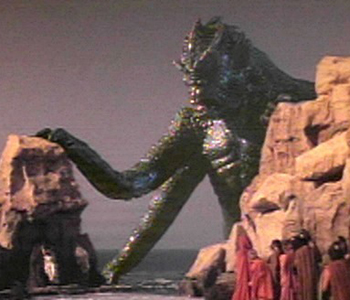
The line "release the kraken" from the commercials for the Clash of the Titans remake seems to have caught the attention of the nation, especially among people who think the phrase sounds like a euphemism for doing number two. I never saw the first Clash all the way through, and I'll probably wait until the remake comes out on video to see that. I do know that neither movie is really all that accurate to the original myths, so I'm sure it surprises no one that the kraken is not a part of Greek mythology. The monster that Perseus killed in order to save Andromeda is referred to as a "ketos," or in Latin form, "cetus." This appears to simply mean "sea monster" in Greek, but according to Wikipedia, the mythical monsters were portrayed as giant fish with some serpentine features.

The term has since been applied to whales, with our word "cetacean" obviously deriving from the Greek. There are several species of whale inhabiting the Mediterranean, and most of them are the toothed kind rather than the baleen variety (the fin whale is an exception), so I suppose they could theoretically eat a person. This also calls to mind the creature that swallowed Jonah, referred to as a "great fish" in the Hebrew, but popularly called a whale. I have no idea whether the author of Jonah would have known that whales weren't fish, or whether he had any particular species in mind for Jonah's captor.


The constellation Cetus is found among several others from the story of Perseus, so it's presumably supposed to be seen as the one slain by the hero. The group of stars is now typically called "the whale," although as with with most constellations, it really doesn't look like much of anything.

Still, its association with a sea monster is an old one, with ancient Babylonian astronomers identifying it with Tiamat.


The kraken actually comes from Norwegian folklore, and there are a few different indications as to what it might be. It appears that the earliest known mentions of the monster are from the eighteenth century, and refer to the kraken as a crab-like monster the size of an island, which eats smaller fish, but also nurtures their growth with its excrement. In popular culture, however, the kraken is generally thought of as a gigantic octopus, possibly based on the real giant squid. As with most mythical sea monsters, encounters with them are incredibly dangerous and usually fatal.

While I don't know about the new Clash film, the monster in the old one doesn't at all resemble an octopus or even a crab, so I guess they just used the name "kraken" because it's more familiar to modern audiences than "cetus."
vovat: (Bast)

The early seventies must have been an auspicious time for musicals based on the life of Jesus, because it's when Godspell and Jesus Christ Superstar came out. I recently had occasion to watch the movie versions of both of these. Although both covered the same subject, they did so in quite different ways. Godspell was more of a performance art piece, while JCS was a rock opera with more of a story and exploration of character. Also, Godspell focuses largely on the sayings and parables of Jesus, and JCS explores the events leading up to his death. I have to say I much preferred JCS, but I guess I've never been much of a performance art fan. Godspell also struck me as rather more over the top. Both made Jesus' followers into hippies (a sensible choice for people who wandered around preaching peace and love), but the Godspell hippies had much more exaggerated and clownish outfits. Also, both included some modern references, but they seemed rather more blatant in Godspell. Maybe that's just because of the Three Stooges references, though. It called a lot of attention to its New York City setting, but I don't think this was even mentioned in the dialogue. Actually, I think both musicals were rather minimal productions that don't take place anywhere in particular, but the Godspell movie makers decided on New York. JCS was filmed in Israel, albeit pretty much entirely outdoors.

As far as the portrayals of Jesus himself go, the Godspell Jesus was happy. REALLY happy, in fact, pretty much all the time. The titular superstar of the other film, however, had a greater range of emotions, spending a lot of time fretting and clearly having a temper. Godspell didn't really explore the other characters all that much, while JCS was largely focused on characterization. Judas Iscariot was played as a sympathetic tragic figure with conflicting opinions toward Jesus. Even the high priest Caiaphas, while not the nicest guy, is hardly the irredeemable villain that Christian writings present. As such, I'm a little disappointed that they kept in the stuff about the bloodthirsty Jewish leaders pretty much forcing Pontius Pilate into crucifying Jesus, which rather reeks of antisemitism. Not that I think the makers of the musical were being intentionally antisemitic, but with the nuances they added to other characters and scenes, I would have hoped this part would have been less straightforward. In fact, if the Wikipedia article is any indication, the very fact that the characters are fleshed out beyond their Biblical portrayals caused some controversy among Christian critics. Apparently they would have preferred if Judas had just been a fink, rather than a character with multiple dimensions. Oh, and I also feel it necessary to mention JCS's Herod, a flamboyant partying dork who made for an enjoyable scene. I get the impression Herod is the role they give to the actor who isn't particularly good-looking.

Overall, Godspell was fine for what it was, which was essentially a rather vaudevillian work of performance art based on the Gospels (particularly Matthew). But JCS was more of a fun and interesting viewing for me. I've read that it was based mostly on the Gospel of John, although Judas' fate was taken from Matthew, the book with the most sympathetic presentation of the betrayer.
vovat: (Bast)

It's well known that Jesus was not the first deity said to have been resurrected from the dead. The Egyptian Osiris was killed and brought back. Odin sacrificed himself on the World Tree for wisdom, which wouldn't have done him much good if he hadn't come back to life. Bacchus/Dionysus was resurrected in a rather different manner, with his mother having died and his being born from Zeus's thigh. Another deity I've seen mentioned in this context is the Phrygian Attis, but the evidence for this isn't fully convincing. A quick Internet search has resulted in some usually fairly thorough sources, like Wikipedia not even mentioning resurrection, but merely the preservation of Attis' body. Still, there do seem to be some parallels between the festival of Attis and the celebration of Easter, so it's as good a time as any to discuss this mythical figure.


Attis originated in Asia Minor, although some aspects of his worship later spread to Greece and Rome. His birth story begins with Cybele, the Phrygian Earth Mother goddess. She had as a child a hermaphroditic demon named Agdistis. The Greek version of the story says that Agdistis was conceived when Zeus, having his sexual advances toward Cybele rebuffed, resorted to masturbating on top of her. I'm inclined to believe this wasn't part of the original myth, but rather something added by the Greeks to tie it in with their own pantheon. And since the Greeks already HAD a Mother Earth figure in Gaia, Cybele seems to have been retconned as a more minor nature deity. Anyway, the gods were just as frightened by a double-gendered deity as many people still are today, and castrated the demon. The cast-off genitals grew into an almond tree, and when Nana, the virgin daughter of the river god Sangarius, pressed one of the almonds to her breast, she ended up pregnant. (See, I TOLD you abstinence wasn't an effective way to prevent pregnancy!) Nana left her son Attis out in the wild to die, but he was tended by a goat and later adopted by humans, although their names apparently weren't worth mentioning. Cybele fell in love with the beautiful youth, apparently not knowing he was, in bizarre convoluted fashion, her grandson. When Attis tried to marry the Princess of Pessinus, Cybele became angry at him, and either she herself or Agdistis showed up at the wedding to drive Attis insane. In his madness, he castrated himself, and for some reason his father-in-law (whom some Greeks identified as Midas, the guy who had the golden touch at another point in his life) followed suit. Attis then died, but Cybele managed to preserve the body. At least, that's what appears to have been the more common story, and the one that can be linked with Easter. The Lydian version says that Zeus, jealous of the people's worship of Cybele, sent a boar to kill Attis and other Lydians, which is why the Gauls of Lydia didn't eat pork.


The festival of Attis, which lasted well into Roman times, involved cutting down a pine tree (the kind of tree under which the mythical character died), decorating it with violets (which sprang from Attis' blood as he died), and bringing it to a sanctuary, where the priests would cut themselves and sprinkle their blood all over the tree. These same priests were known to castrate themselves when entering into the order, in veneration of Attis' own actions. If you had a low tolerance for pain, Attis probably was not the god for you. Anyway, the worshippers mourned the dead Attis for three days, after which they had a wild celebration of his resurrection or bodily preservation. By the Roman calendar, this festival took place on the twenty-second through twenty-fifth of March, around the time of the vernal equinox. Although the date of Easter is based on a lunar calendar rather than a solar one, 25 March was often associated with Jesus' death, as well as his conception. There was a belief at that time that his living an exact number of years had to do with his being a prophet, or something like that, although I don't know how that idea originated. I'm sure it was no coincidence that this had him being born at the beginning of winter and dying at its end, nor that it meant Christian holidays could be transplanted onto existing pagan festivals. And the spring death does make sense, as Jesus is said in all known sources to have died during Passover. If Easter was influenced by the festival of Attis, that could explain why it's common rhetoric that Jesus was dead for three days before coming back to life, although the story as told in the Bible makes it only about a day and a half. It's also possible, however, that this figure is to coincide with Jonah's being inside the big fish for "three days and three nights." Or maybe it's both.
vovat: (Kabumpo)

The Lunechien Forest of Oz, by Chris Dulabone - Both an introduction to a location that appears in a lot of Chris's other Oz stories and a follow-up to Baum's short story "Jaglon and the Tiger Fairies." A creature named Quasoic takes the necessary tests to become a resident of the Lunechien Forest, while the defeated lion monarch Avok has his own Ozzy experiences. One clever chapter links Avok to King Mustafa of Mudge's obsession with lions, which would get him in trouble in Cowardly Lion. One complaint I have is that, like some of Chris's other stories, while there is a resolution of sorts, it doesn't feel like it ends so much as fizzles out. I know Chris usually writes with a sequel in mind, but tighter endings still help. Mind you, I say this as someone who's terrible at writing endings.


The Giant King of Oz, by Chris Dulabone - Another follow-up to a Baum short story, this time "The Littlest Giant." While that story left Kwa, son of the former King of the Giants' Peak, in disgrace, this one has him seek to set things right (well, right as far as giants are concerned, anyway). Mr. Yoop also features in the story, as does Chris's own giant creation the Cokuzima. One of my favorite episodes was the Cokuzima's meeting with the joke-cracking two-headed giant. It's a fairly short book, but the story is satisfactorily resolved, so I can't really complain.


Who Wrote the Bible?, by Richard Elliott Friedman - Considering my recent posts on the same subject, it's no surprise that I'd be interested in checking out a book with that title. Contrary to the name, it doesn't really explore the entire Bible. Rather, it focuses on the Torah, while bringing up other books when relevant. I didn't enjoy it the less for that, though. It's quite detailed, and seeks to explain the background in which the various authors of the Torah wrote. One aspect of the introduction that I found interesting and a little disturbing was how recent much of this research was, not because past scholars weren't interested, but because the churches were able to silence anyone who challenged the idea that it was all written by Moses. That the Documentary Hypothesis is now widely accepted is a testament to the declining power of the religious establishment, I suppose.


Finn Family Moomintroll, by Tove Jansson - Part of a series of Swedish children's books about the adventures of some rather odd characters. This was the first of the series to be translated into English, and as such, it includes some explanations of the characters. This actually wasn't the first of the Moomin books I read, but I think I lost something in the others by not knowing the characters. Not that there's a whole lot to know, but it's definitely useful to have some idea what a Hemulen is before reading about one. I found the book to be a fun read, episodic but still unified, with some amusing ideas. Very weird, but maybe it isn't considered as much so over in Scandinavia.


Beach Blanket BabylOz, by Christopher Buckley - A fairly short tale about an accident in magic bringing several Ozites to an American beach. The story is pretty slight, but inventive and sometimes melancholy.
vovat: (Bast)

I guess Passover has started now, right? I'm not really that well versed in Jewish holidays, but from what I do know of them, they tend to have a greater sense of history than Christian ones. Christians often just seemed to say, "Okay, let's take this pagan holiday, throw Jesus in somewhere, and call it a day. Literally." While the primary Jewish holidays might not actually date back to Moses, they're definitely ancient. The Torah commands the observance of various festivals, including Sukkot, Shavuot, Rosh Hashanah, and Yom Kippur (the holiest day of the Jewish year). Passover has special connection with the Exodus, however, the name said to have come from the fact that the angel of God passed over the homes of the Hebrews when killing the first-born of Egypt. This was allegedly because the Hebrews smeared their doorways with lamb's blood, but since they were supposed to have lived in the Land of Goshen apart from the native Egyptians, I'm not sure why this was necessary. Couldn't God have just said, "Hey, skip over Goshen when on your killing rampage"? Regardless, the custom was to sacrifice and eat a lamb during Passover. Later, Christians introduced the idea that Jesus, who by all accounts was executed during Passover, was the new sacrificial lamb. But that's another story. Other foods eaten during the Seder include bitter herbs to symbolize the hardship of slavery in Egypt, charoset to represent mortar, and unleavened bread because the Hebrews left Egypt in such a hurry that they didn't have time to finish baking bread.


Now, I recently finished reading the book Who Wrote the Bible?, by Richard Elliott Friedman, and it makes a good case for how portions of the Torah were added or revised to support the points of view of the authors. The golden calf story is a good example. In Exodus 32, it's said that while Moses was chatting with God on Mount Sinai, his brother Aaron made an idol in the form of a young bull (translated "calf" because apparently English doesn't have as many words for the bovine life cycle as Hebrew does). If you read ahead to 2 Kings 10, you find more golden calves as symbols of God, this time placed in the cities of Bethel and Dan by King Jeroboam of Israel. Obviously, the more traditional priests weren't too fond of this, and it's thought that one of them might have composed the golden calf episode in Exodus as a response to this. It's sort of like saying, "See? We aren't the only ones who hate representing God this way. Moses himself hated it as well!" In addition, by making Aaron the wrongdoer in the piece and leaving Moses as innocent, it might well have been a way to promote the priests who traced their ancestry to Moses over those who claimed to be descendants of Aaron (although the Aaronid priests won out in the end). So why do I mention this? Partially just because I found it interesting, but also because it shows that the Torah probably doesn't all date back to Moses. Passover, however, does seem to be legitimately old. I have seen it suggested that it might have evolved from a more generic spring festival, but I guess that's really neither here nor there at this point. Interestingly, according to the Wikipedia article, "Pesach" might more accurately translate to "hover over," which casts some doubt on its getting its name from the angelic assassin.


One item that interested me about the Seder is how it's traditional to leave your door open and set a place for Elijah. Obviously that doesn't relate to the Exodus, since Elijah wasn't around until several centuries after that. So how did it come about? Well, part of it is that Elijah is said to have ascended bodily into Heaven, which presumably means he never really died. The book of Malachi ends with a prediction of his return on the "Day of the Lord," which came to be interpreted as meaning he'd show up back on Earth shortly before the arrival of the Messiah. Followers of Jesus identified John the Baptist with Elijah, since he more or less heralded the coming of Jesus (or at least that's the way it seemed, since Jesus' ministry began around the same time John was executed). People who think the Messiah has yet to arrive would probably say that Elijah hasn't yet returned to Earth either. So I would imagine that's why believers would expect to see Elijah and not, say, Moses, who's more closely associated with the festival but also is said to be dead and buried. There's also a tradition that Elijah will settle the difficult questions of Judaism when he arrives, including that of whether four or five glasses of wine should be served during the Seder. Since the question has never been officially resolved, the fifth cup is poured but not drunk, and said to be left for Elijah. This in turn developed into the idea that Elijah might actually show up to have a drink. If so, I hope he doesn't stop by too many houses. I don't even want to know what a guy who can bring down fire from the heavens is like when he's drunk.
vovat: (zoma)

Based on what I've read on the subject, the literal truth of the Bible is a subject that's been debated for much longer than modern fundamentalists would probably care to admit. Arguments over whether books like Job and Jonah should be taken as true history or fables date back pretty far. When Christianity was being developed, church leaders debated how much of the Old Testament they were going to accept, and how much of the old law that they were largely rejecting should still be taken as applying literally. As scientific and historical research have progressed and demonstrated that, for instance, the Earth revolves around the Sun and is much more than a few thousand years old, there are Christians who will try to reconcile these new discoveries with the Bible, and others who lash out against them and perhaps start taking the Bible even MORE literally.


I would posit that it really isn't possible to take the Bible entirely literally. It just contradicts itself way too often for anyone who actually knows the conflicting stories to accept both as the literal truth. Sure, some people will deny there are any contradictions, but when they try to explain a seeming contradiction away, they'll usually either admit that certain parts of the Bible should be understood figuratively, or come up with a convoluted excuse that hardly counts as a literal interpretation. It's apparently a common belief among fundamentalists these days that dinosaurs lived alongside humans, when the Bible obviously says no such thing, and they'll insist that this is taking the book literally. Still, while total and complete literalism is essentially impossible, there are believers who come awfully close. To them, Adam and Eve, the talking trickster snake, fruit that provides knowledge, a worldwide flood, and people living to be hundreds of years old are all actual historical details.


There are a few different ways to interpret these Bible stories non-literally. One is to regard them as fable, with the important part not being whether Adam and Eve really existed, but what their story says about the human condition. Sort of like Jesus' own parables, except not specifically identified as such. Another is a symbolic view, where everything stands for something else. One of the best examples of this sort of interpretation is the Epistle of Barnabas, a Gnostic letter attributed to Paul's companion Barnabas, but much more likely written after his time. He dismisses Judaism as a misinterpretation of the Old Testament, and holds that the passages that seem to be describing distinctly Jewish things are actually pointing to Christianity. Our pseudo-Barnabas says, for instance, that circumcision is unnecessary, but that the description of Abraham circumcising all the males in his household (318 people, according to Genesis 14:14) is significant because some number games result in letters standing for Jesus and the cross. As for the kosher dietary laws, they really just mean not to act like any of the animals that were forbidden to eat. This document obviously wasn't accepted into the canon, but I still hear some interpretations along the same lines today. Harold Camping, owner of the rather extreme even by radio fundamentalist standards Family Radio, frequently insists that just about everything in the Old Testament is "a picture of Christ" or "a picture of salvation." I know he's said King David is a representation of Jesus, because who better to represent a celibate pacifist than a promiscuous war leader, right? :P Mind you, he also considers all of these metaphorical stories to be literally true.


I'm sure some less stubborn Christians would admit that not all of the Bible is entirely true, but would still insist that it's all IMPORTANT. And I can't really argue with that, as the people who wrote and compiled the work wouldn't have included things they didn't think were important. Then again, what was important to them might not be the same as what we find significant in this modern age, when, for instance, the Temple in Jerusalem no longer exists. And I get the impression that some of the people who insist that the Bible is all important also think it has a simple message. Well, no. If it's all important, than its message is complicated, convoluted, and contradictory. And if the only important thing in the whole Bible is the part that deals with belief in Jesus, then how are the sections that have nothing to do with that important? As a non-religious person who nonetheless takes a good deal of interest in the Bible, I have to say that regarding everything in it as simply reinforcing one basic idea is kind of disrespectful to the variety of material to be found in the book. Why would we need metaphorical stories to illustrate the importance of Jesus when we have the New Testament to say that verbatim?
vovat: (Polychrome)
Since I already wrote about Rainbow Brite today, I might as well keep the rainbow theme going with my weekly mythology post. In Greek mythology, the goddess of the rainbow is Iris, the daughter of the sea god Thaumas and the sky nymph Elektra. Like Hermes, she serves as a messenger for the gods, sometimes between themselves and other times with the mortal world. Some sources suggest she typically served as the personal messenger and herald for Hera, but Homer has her delivering several messages for Zeus. She is usually portrayed with wings, and is said to be married to Zephyrus, god of the west wind. In the Percy Jackson books, the children of the gods communicate via Iris-messages, which can be sent through any rainbow with an offering of money.


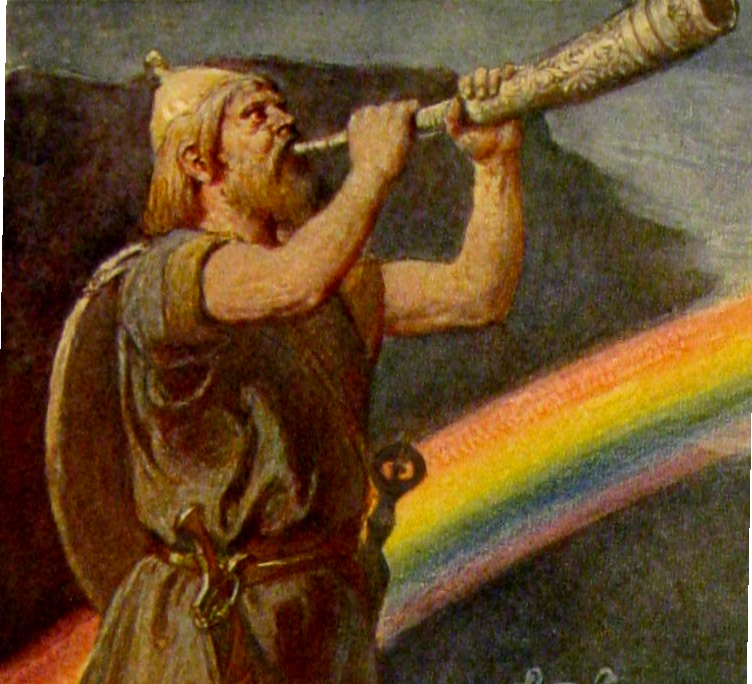
In Norse lore, the name for the rainbow is Bifröst, and it is used as a bridge between our own world of Midgard and the gods' abode in Asgard. The color red at the top is a burning flame, which prevents the frost giants from crossing it. The guardian of Bifröst is Heimdall, son of Odin, who keeps constant watch over the world. During Ragnarok, the giants will finally manage to cross over the rainbow bridge, and it will shatter with their weight. There's apparently a school of thought maintaining that the bridge between Earth and Heaven was originally thought to be the Milky Way rather than the rainbow, but common association still identifies Bifröst with the colorful arch.


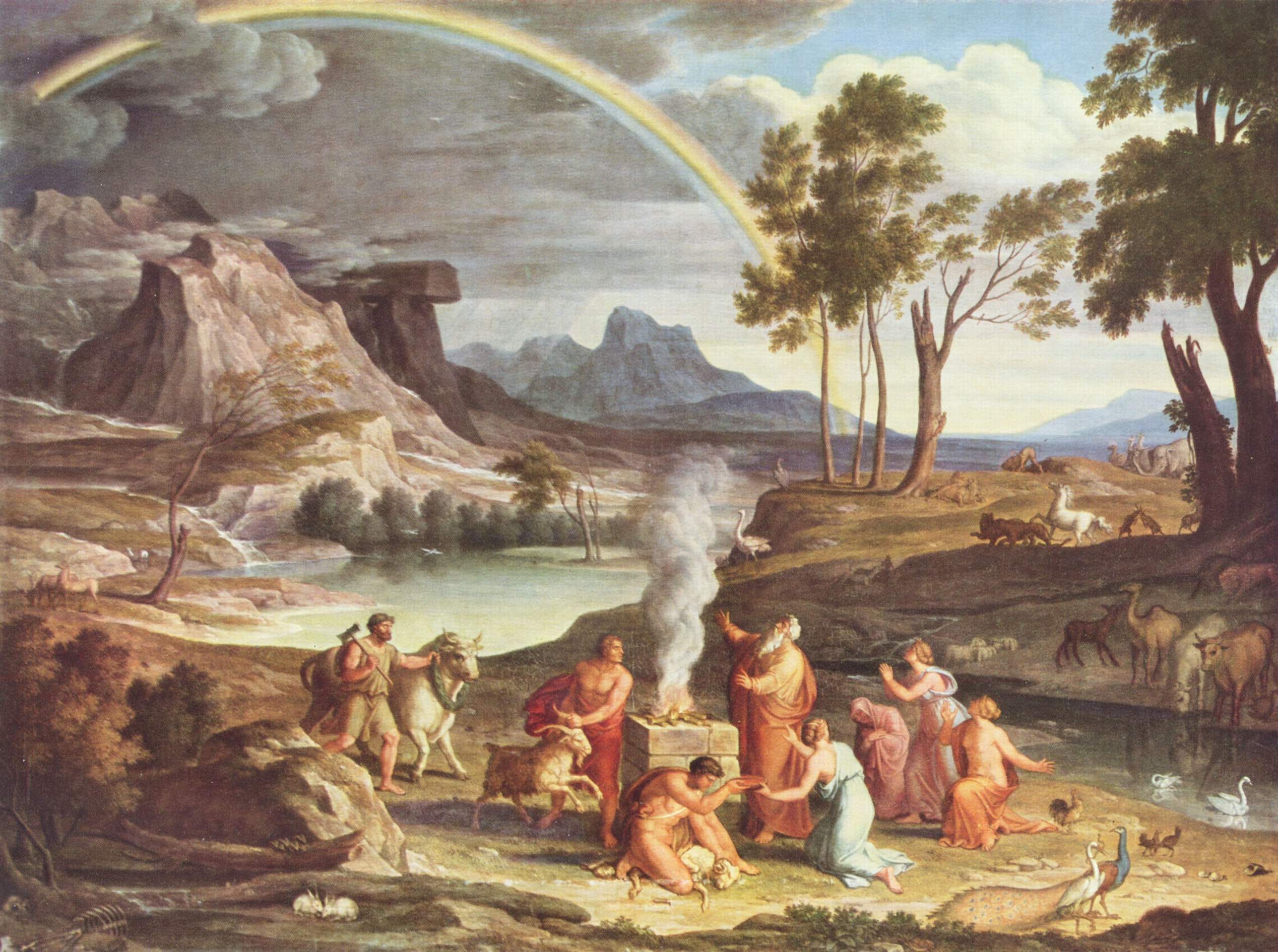
The rainbow is also featured in the Biblical book of Genesis. After the great flood (you know, Noah's Ark and all that), God placed the rainbow in the sky as a sign that He'd never flood the entire world again. It's a good thing we have the rainbow, then, because otherwise He'd probably be causing worldwide floods every other week. The big guy must have memory problems, but that's not surprising for someone His age.


So what about the pot of gold at the end of the rainbow? I'm not sure exactly how that started, but it seems to have originated in Europe, and is especially identified with Ireland. One possible origin is a story about a leprechaun who grants a wish to a poor couple, and when they wish for riches, he tells them that their prize is at the end of the rainbow. Since it's impossible to get there, they never actually get the money, which is the leprechaun's punishment to the couple for their greed. This page says that some versions of the legend say that only a naked man can claim the gold, which sounds like it could be another leprechaun trick. The identification of leprechauns and pots of gold with rainbows is now so culturally ubiquitous that it can safely be referenced in children's cereal commercials.
vovat: (Bast)

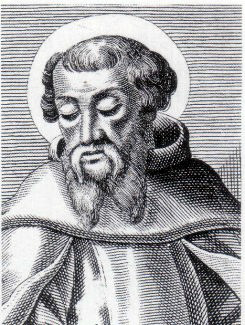
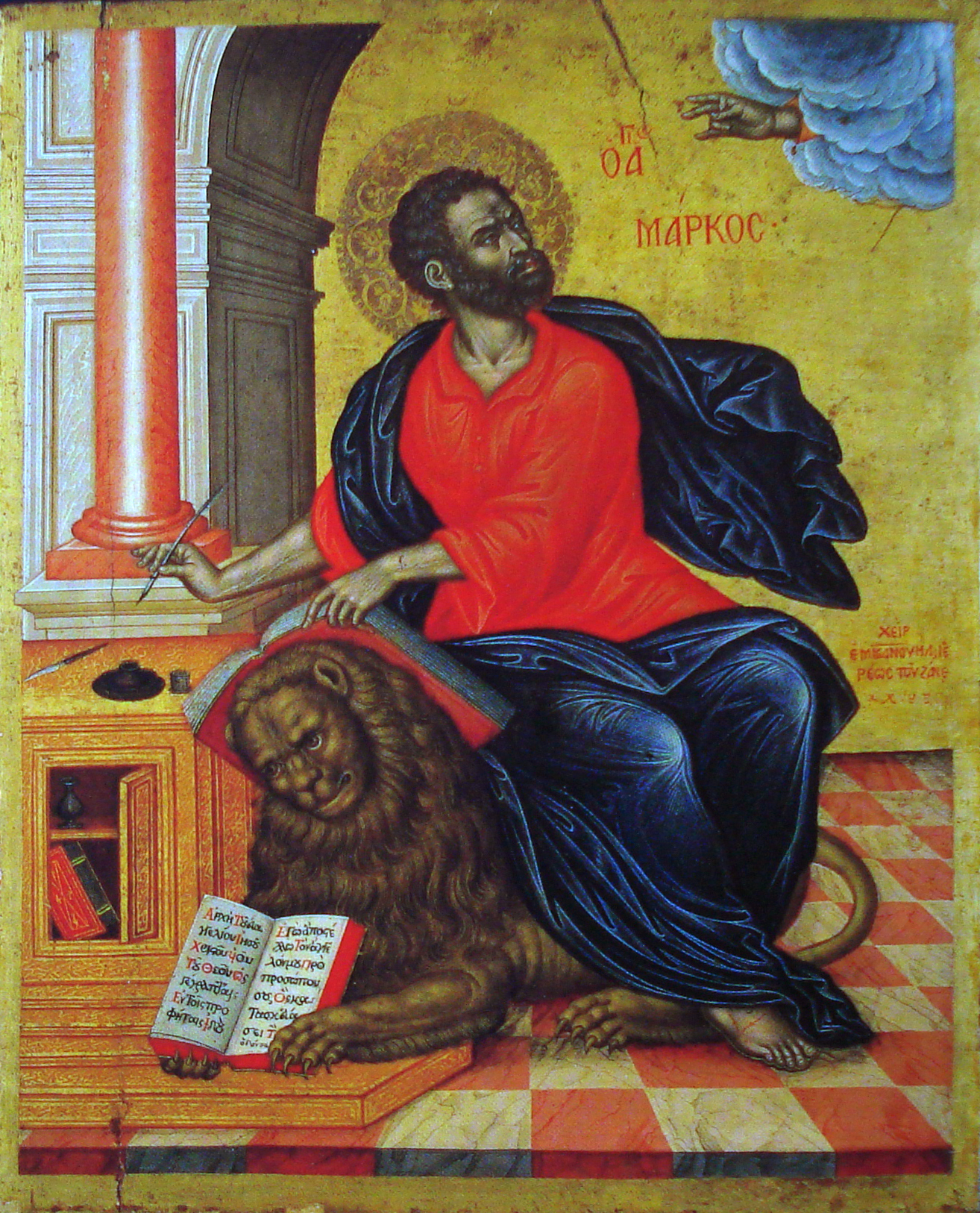
To finish this series on Biblical authorship, I turn to the New Testament, which usually consists of twenty-seven books. These are primarily letters to various churches and individuals, plus five books of stories and one of prophecy. The first four are the Gospels, of which there are many more than four. So why only four in the Bible? Well, that was the decision of Irenaeus of Lyons, second century Bishop of Lugdunum. He argued that there should be four Gospels because there are four winds and four corners of the Earth. Even though it would have been pretty well-known by this time that the world was round, and hence didn't HAVE corners. Maybe he just liked the number four. Anyway, the Gospels are all anonymously written, but tradition developed linking them to important figures in early Christianity, based largely on the style of each one. Matthew was attributed to one of Jesus' twelve disciples, the former tax collector Matthew or Levi. Its content is largely Jewish in nature, showing how Jesus was the fulfillment of various Old Testament prophecies (as well as some things that really WEREN'T prophecies). Working against this attribution are the likelihood that the book was originally written in Greek instead of Aramaic, as well as the fact that our supposed Matthew seems to have relied on secondary sources. In fact, while early tradition had Matthew as the first Gospel written, scholars now seem to be quite largely in agreement that Mark was the first, and Matthew used Mark as a source. Its credited writer was John Mark the Evangelist, a cousin of Barnabas and companion of Paul, suggesting that even the early church didn't regard it as an eyewitness account. From what I've seen, Mark tends to be the least popular of the Gospels, with preachers preferring the more stylized accounts in the other three. The author of Luke claims to be a physician, writing to someone in Rome named Theophilus, and trying to provide more of a historical context for the deeds of Jesus. In doing so, however, it appears that he was often too eager to link Jesus' life to events that would have happened around the same time, resulting in such gaffes as his overly complicated tale of everyone having to travel to the homes of their ancestors during the census. The same author wrote the Book of Acts, some parts of which are delivered in first person, hence implying that he was Paul's companion. John, the final Gospel and the one with the most mystical, metaphysical conception of Jesus, was attributed to another one of Jesus' apostles, John son of Zebedee. It was a popular idea that John was "the disciple Jesus loved" who's mentioned several times in the book, but it seems rather bizarre that John would have said, in essence, "Yeah, Jesus liked ME the best, suckers!" This same apostle was credited with the three letters of John and the Revelation to John, but stylistic differences make it unlikely that the same guy composed all of them. The author of Revelation makes it clear that his name is John, but he never claims to have been a disciple, or to have written a Gospel. And while the Gospel of John is heavy on Greek mysticism, Revelation is more Jewish in flavor, making constant Old Testament allusions. Not to mention that, with the dates generally given for these books, John would have had to have been really old when he wrote them.


Unlike the Gospels, the authorship of many of the letters that made it into the New Testament is quite clear. The most represented letter-writer is, of course, Paul. That said, Paul was so well-known for his epistles that it's pretty likely some were also forged in his name. In fact, even when the canon was first being determined, doubt was cast on the letter to the Hebrews being the work of Paul. It seems that the church fathers threw this one in just because it was popular, and they liked its theology. Do you get the idea by now that these church fathers weren't all that consistent in their decision-making? The non-Pauline epistles are even more difficult to place. The two letters of Peter were most likely not the work of the apostle. James was commonly said to have been written by Jesus' brother, head of the church in Jerusalem, but he makes no indication of this and a lot of people were named James. Jude is often attributed to a less famous brother of Jesus, called Judas in the Gospels, but again this isn't so much based on actual evidence.


Really, what I've read in and about the various books of the Bible suggests that the whole thing is basically a hodgepodge, with a lot of things being included or excluded simply due to their relative popularity or the preferred theology of the people making the decisions. And in some ways, this is a good thing, because it resulted in different opinions being presented. Can Moabites enter into the Jewish congregation? Is God the author of evil? Was Jesus human or divine? In all of these cases, there are passages to support both sides. The fact that the book was largely cobbled together makes it, in many ways, a much more valuable source than it would have been if it had been entirely written by one person. But when people claim that the entire Bible is the holy word of God and nothing else is, I have to wonder how much they actually know about how it was written and compiled. Why would the Holy Spirit have been more likely to have worked in the particular authors represented and the particular councils making the decisions than with anyone else? Mind you, I'm writing this as someone who isn't religious at all, but I have to say I have more respect for a believer who does their own research than one who just accepts wholesale what other people tell them. People who think the Bible has a simple message and that they know exactly what God is telling them seem to be missing that the deeds and sayings of a non-human intelligence presumably WOULDN'T be easily interpreted by mere mortals. Yeah, sure, your deity is unknowable but you know for a fact that He hates gays and opposes the teaching of evolution, and that YOU'RE going to end up in Heaven. You really don't see the problems with that line of thinking?
vovat: (Minotaur)

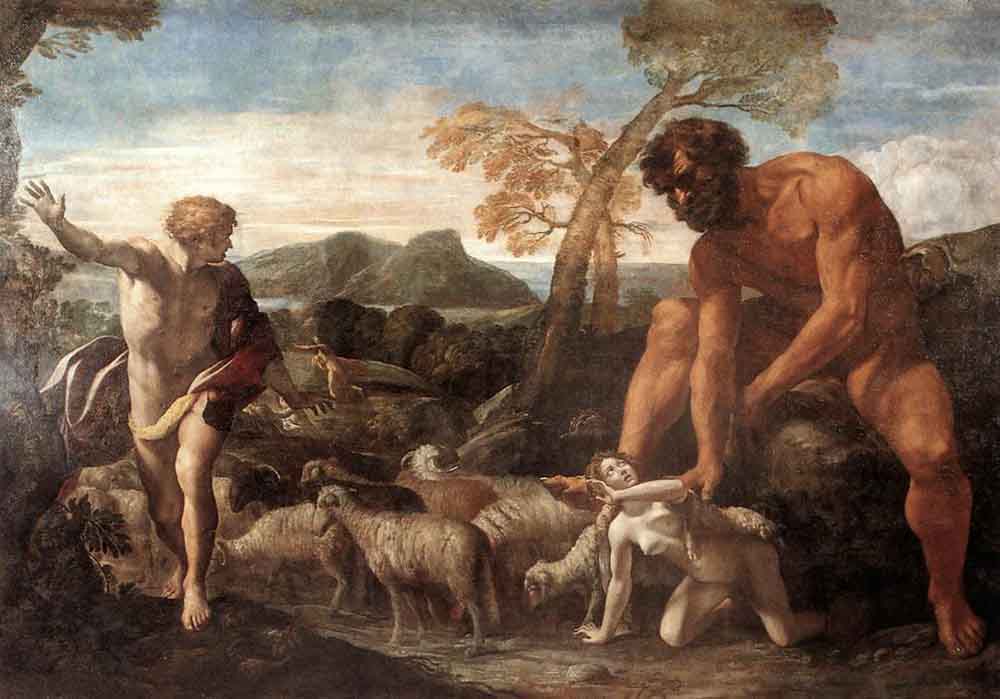
If I were to refer to a giant, you'd have a pretty good idea what I mean, right? Or would you? While giants are all big and humanoid, they vary in a lot of ways. Some are only slightly larger than normal humans, while others are truly huge. Goliath's height is given in different versions of the Bible as "four cubits and a span" (about six and a half feet) and "six cubits and a span" (about nine and a half feet). The Nephilim are said in the Book of Enoch to be 300 cubits (about 450 feet) in height. The Gigantes and Hecatonchires were presumably large enough to move mountains. Most of the Norse Jotun didn't seem to be much bigger than humans or Aesir, but their ruler Utgard-Loki had a glove that Thor and his companions mistook for a building, and the primordial giant Ymir must have been planet-sized. When a creature can vary from eight feet tall to positively Himalayan, they're probably not all the same species, are they? Then again, using scientific terminology for beings that couldn't really exist, as the Square-Cube Law means a human frame that big would collapse instantly, might not be the best idea.


So what about ogres? As far as fairy tales go, I don't know that there's a whole lot of difference between giants and ogres. Well, that's not entirely true. It's more that there doesn't HAVE to be a difference. A large being that's basically humanoid but with grotesque features that eats regular-sized humans could be called either a giant or an ogre. The thing is, however, that some giants of mythology and folklore are friendly, helpful, intelligent, and even beautiful. Ogres pretty much HAVE to be mean, ugly, and dim-witted, or they wouldn't be ogres. I guess they could be considered a subset of giants that are less human than their fellows. The Wikipedia page says that the term dates back to twelfth-century French, and gives several possible derivations.


There is, perhaps, even more confusion over trolls. These creatures of Norse mythology are often more or less interchangeable with giants and ogres, but other traditions say that they are essentially human-sized dwellers of forests and underground caves. Trolls are generally considered to have magical powers, and in some parts of Scandinavia, the stories told about them were similar to ones about fairies in other parts of Europe. Modern popular culture still provides several different takes on trolls. The Scandinavian folk tale of the Three Billy-Goats Gruff makes its troll a ravenous creature that lives under a bridge and is easily fooled, which would make it not all that different from your typical ogre. But we also can't forget the troll dolls that gained popularity in the early sixties and have enjoyed occasional resurgences since then. I remember them being big in the mid-nineties, when I was in high school. These trolls are hardly ogrish brutes, but instead cute creatures with brightly-colored hair. Tolkien's trolls are large and uncouth humanoids that turn to stone in the daylight, a trait that he probably took from tales of the Norse dwarves. Terry Pratchett's Discworld series expands upon this idea of Tolkien's by having trolls made of rock, and saying that they freeze up in the daylight because they can't handle the heat. Their silicon-based brains are similar in operation to computers, so trolls in warmer areas tend not to be very bright. Sunscreen and devices like the cooling helmet Sergeant Detritus wears have enabled trolls to function more smoothly in cities. Oh, and for what it's worth, the term "troll" for an Internet agitator presumably comes not from the monsters but from the fishing term, although it works pretty well with both definitions.
vovat: (Bast)

Continuing where I left off last week, we come to the two books of Chronicles, and then Ezra and Nehemiah. These are all believed to have been written by the same author, or at least edited by the same person. Ezra and Nehemiah are still one book in many versions of the Bible, although a Christian scholar separated them in the fourth century. Basically, the Chronicles retell the Jewish national history with a priestly bias rather than a prophetic one, and Ezra/Nehemiah tells of the return to the homeland after the Babylonian captivity. Ezra is frequently credited as the author, as well as the compiler of the Torah, which makes a certain amount of sense.


The typical Christian arrangement of the Bible then moves on to some of the Writings and wisdom literature. Obviously, it's difficult to tell who actually wrote the Psalms or the Proverbs, and they were most likely the work of several authors over the years. Many of the Psalms are attributed to David, and it's certainly possible that some were genuinely his work. Others, however, are presumably from much later. Psalm 137, for instance, makes pretty clear references to the Babylonian captivity. Proverbs, Ecclesiastes, the Song of Solomon, and the not-generally-canonical Wisdom of Solomon are all attributed, of course, to David's son. Modern scholars tend to think this is unlikely for...well, all of those, although some of the Proverbs could really have been his. Solomon's reputation as the wisest man who ever lived made him an obvious choice for authors of wisdom literature to use. It seems pretty obvious that these books weren't all written by the same person anyway, unless he was really proficient at working in different styles. Also in this same general section of the Bible is Job, which was attributed in ancient times to none other than Moses himself, but is today believed to have most likely originated in Edom. As it holds no special regard for Israel or the Jewish people, and uses a generic name for God, it could easily have been borrowed from another culture, although its present form is most likely post-exilic.


Next we come to the prophets, and in many of these cases there's no reason to assume that the name on the book ISN'T that of its author, although there are significant exceptions. Jonah is a significant example, because the material in his story doesn't match up with what we're told of the historical Jonah in Kings. Actually, the book of Jonah is written in the third person, so it's not even like its author was necessarily lying. Isaiah is well-known to be the work of more than one author, one of them most likely being Isaiah himself, but one or more other authors adding in material during the exile and editing it all together. This is thought to also be the case with some of the other prophets (Ezekiel, Zechariah, and Micah, for instance), although it isn't as clear in these cases as it is with Isaiah. Daniel isn't even included among the prophets in the Tanakh, but Christians probably stuck the book in that section because of its enormous influence on the apocalyptic nature of early Christianity (and some branches of the religion today; doom-and-gloom end-times preachers LOVE the later part of Daniel). Jesus himself referred to its "abomination that makes desolate," and the beasts of Revelation were obviously inspired by those of Daniel. I'm pretty sure I've discussed before how, even though Daniel takes place during the Babylonian captivity, the matters it deals with pertain much more clearly to the Jews living under the yoke of the Greeks, and Antiochus Epiphanes in particular. And it's the part that deals with the Greek occupation, starting with Chapter 7, that's told in the first person. As for Lamentations, its presence in Christian Bibles immediately following Jeremiah is due to its traditional attribution to that prophet, but this credit is heavily disputed.


Next time, the New Testament! And by the way, if you're wondering where I got the title for this series, check this out.
vovat: (Bast)

Who wrote the Bible? This is a question that's been debated considerably over the centuries and millennia, and there's plenty of information online and elsewhere supporting different views. Since it's a topic that interests me, I intend to devote a few posts to it, despite the fact that I doubt I'll be saying anything new. To many, the authorship is a moot point, because God wrote the whole thing. Why God would work in so many different styles and espouse different philosophies isn't clear, but that's another issue. Others believe that the Bible was simply inspired by God, or that it was entirely the work of humans. Not surprisingly, I take the latter view. Whether or not the Almighty was at the helm, however, the books were obviously written down by different people.


The first five books, known as the Torah or Pentateuch, have long been considered to be the work of Moses. The thing is, however, that even if you accept those books word for word, nowhere in there is there an indication that Moses wrote them. He's said to have written various things, but not those entire books. And how would he have written about his own death, which is recorded at the end of Deuteronomy? Indeed, it isn't even written as if someone just added this part shortly after Moses' death, as the final chapter of Deuteronomy implies it had been some time since then. It's reported that no one knows Moses' burial place "to this day," and that no other prophet as great as Moses has arisen since, neither of which would have made much sense unless a considerable amount of time had passed. So how did the tradition of Mosaic authorship develop? Really, it's so old that I don't think we can determine the true answer, but Wikipedia indicates that both Josephus and Philo proposed it during Roman times. It's more likely that the books were the work of several different authors, and the Documentary Hypothesis proposes at least four original documents that were combined to make what we now know as the Torah. Among the differences between these authors were what they called God (Yahweh vs. Elohim), which of the two Jewish kingdoms they supported, and whether they focused on Moses or his brother Aaron. The book of Deuteronomy has a particularly interesting history, as it is typically identified as the scroll found in the temple during the reign of Josiah of Judah. Skeptics suggest that it might have actually been written in Josiah's time, with the priests successfully managing to pass it off as the work of Moses.


Moving on to Joshua, this account of the conquest of Canaan is also credited to its main character, Joshua himself. Archaeological evidence has cast a considerable amount of doubt on the idea that the conquest was accomplished in such a neat fashion in a short amount of time, which suggests that Joshua either didn't write it or was exaggerating his own accomplishments. The book also reports the death of its protagonist, with Aaron's son or grandson traditionally identified as the one who wrote this part. I tend to think that even that is pushing it, however, due partially to more "to this day" references (see the story of the twelve stones in Joshua 4, for instance), and also to the mention of the mysterious Book of Jasher in Chapter 10. This book, the title of which literally means "Book of the Upright/Just," has never been found, despite claims that were later found to be forgeries. And this isn't its only mention in the Bible, as 2 Samuel 1:17-18 says, "David intoned this lamentation over Saul and his son Jonathan. (He ordered that The Song of the Bow be taught to the people of Judah; it is written in the Book of Jashar.)" This is from the New Revised Standard Version, and other translations make it less clear exactly what was recorded in Jasher. If it's the song that immediately follows, however, it mentions Saul and Jonathan by name, and hence couldn't very well have dated back to the time of Joshua. Maybe there was more than one book with that name (I've seen indications that Genesis was sometimes known by that title, although it obviously isn't Genesis being referenced in either of these cases), or it was updated like an almanac. If we do consider the two books to be the same, though, it means that Joshua as we know it couldn't have been finished until after the death of Saul. As with the Torah, that doesn't mean that parts of it might not date back to eyewitness accounts, but we're obviously looking at a document that had undergone at least some revisions. As for the attribution to Joshua, could he even write? I'm not being flippant here, but merely pointing out that the Biblical account has Moses raised as a prince and Joshua as a slave, so there presumably would have been a significant difference in educational level between the two.
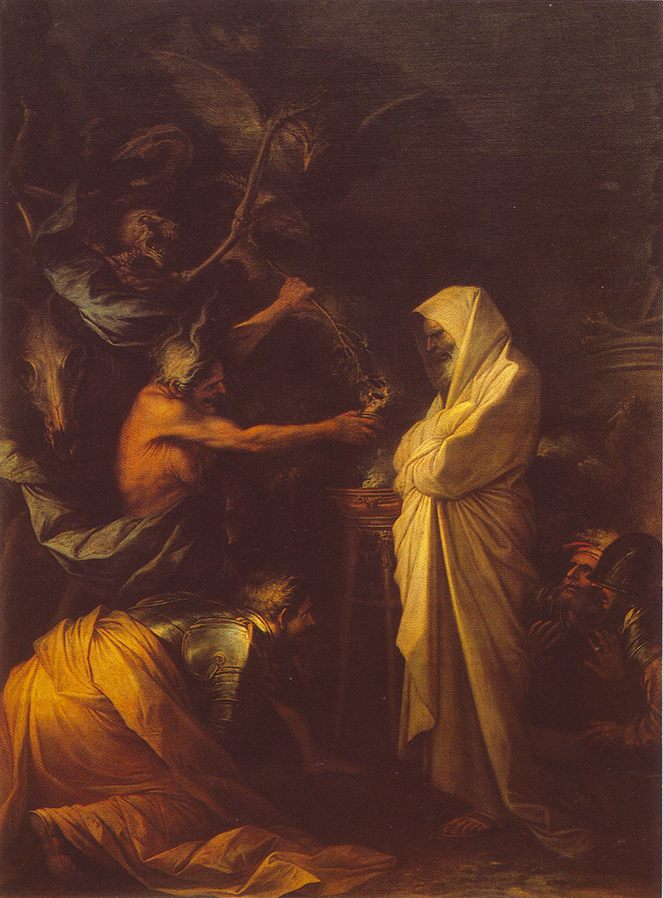

Thankfully, it doesn't look like anyone has tried to attribute the book of Ruth to its main character. Instead, the traditional view holds that it was written by Samuel, as were significant portions of Judges and 1 Samuel. It would make a certain amount of sense for Samuel to have popularized the story of Ruth, as he was promoting Ruth's great-grandson David as the next King of Israel. On the other hand, the story indicates that David was of Moabite ancestry, which might not have gone over too well. As for the books of Samuel, 1 Samuel 9:9 explains how prophets used to be called seers, while 10:12 explains the origin of the expression, "Is Saul among the prophets?" Both of these would presumably have been unnecessary if the book had been written by a contemporary of Saul. And Samuel is dead by the beginning of 2 Samuel, which not only means that he couldn't have written the book, but that whoever came up with its current name was quite likely an idiot. I know some versions of the Bible group the books of Samuel and Kings together and call them 1-4 Kings, which really makes more sense.


Collectively, the books of Joshua through 2 Kings (not counting Ruth, which appears later in the Tanakh) are known as the Deuteronomistic History, due to their views and concerns being similar to those in Deuteronomy. The kings and people are judged by how closely they conform to the laws put forth in the last book of the Torah. Some scholars have proposed that the compiler (and perhaps even writer) of these books was Jeremiah. Not only is the style similar to that of the book of Jeremiah, but this prophet was also known for blaming the hardships of the Jews on the deeds of the kings and their people. The reports of the kings are given from a specific viewpoint, and most are not intended to be complete (the accounts of Saul, David, and Solomon perhaps being exceptions). Indeed, the books of Kings constantly refer to the Annals of the Kings of Israel and Judah, which were presumably much more detailed sources. Unfortunately, these Annals have been long since lost to history.


If there's any interest, I'll continue this series in later weeks. Until then, you can read more about the topic here and here.
vovat: (Bast)

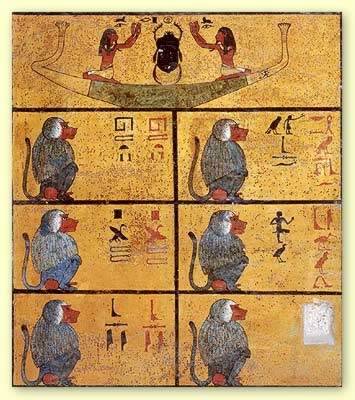
It's been a while since we've looked at the ancient Egyptian pantheon, so today we turn to one of its principal deities, Djehuty. Well, that's how some modern scholars spell his name, anyway. No one now knows the proper pronunciation of the hieroglyphics, and while "Djehuty" may well be more accurate, it's by the Greek spelling "Thoth" that the god is commonly known. Thoth was the scribe and mediator of the gods, the inventor of writing and language, and the judge of the dead. He was also identified with the moon. Depictions of Thoth typically show him with the head of an ibis, although he apparently takes the form of a baboon for his underworld functions. I can't say I've heard of baboons being considered a symbol of wisdom in any other culture, but as one of very few primates known in ancient Egypt, it might well have had intelligence closest to that of humans. Mind you, I've always felt that measuring animal intelligence by human standards was quite biased, but I suppose it's a bias that's difficult to avoid when being a human writing for other humans. And by human standards, baboons have really ugly butts. (WARNING: Don't click that link unless you're prepared to see a picture of a monkey's behind.)


Anyway, some myths credit Thoth with creating himself through the power of knowledge, which seems like quite a feat. He's also associated with the lengthening of the 360-day lunar year to the 365-day solar one, explained by saying that he gambled with the moon god Khonsu for an extra five days. I believe his role as judge of the dead is one of the better known Egyptian myths, involving his weighing the heart of the deceased against the ostrich feather worn by his wife Ma'at. I don't see how anyone could win at that, except maybe if the feather were that of one of the Stymphalian birds killed by Hercules, but I'm sure it wasn't meant to be taken literally. Still, it raises some questions. If a heart is weighed down by guilt over bad deeds, then what about a psychopath who did all kinds of bad things but felt no remorse? And what about how the Grinch's heart had to grow three sizes before he started feeling guilty? I guess they must have had these things worked out somehow, but maybe not. Reanimated mummies are always pretty angry when they appear in campy horror movies, so maybe they're reeling with the unfairness of the justice system.


For information on the Greeks' association of Thoth with their own god Hermes, you can read about Hermes Trismegistus in this post. Or you can do a Google search for information like I did in order to write that in the first place, but can you really blame me for promoting my own writing? Thoth is also sometimes associated with the Biblical patriarch Enoch, who came to be known as the inventor of writing and the solar calendar. But could he turn into a baboon? I didn't think so!

December 2025

S M T W T F S
 123456
78910111213
14 151617181920
212223242526 27
28293031   

Syndicate

RSS Atom

Most Popular Tags

Style Credit

Expand Cut Tags

No cut tags
Page generated Jan. 4th, 2026 01:42 pm
Powered by Dreamwidth Studios