vovat: (Woozy)
  
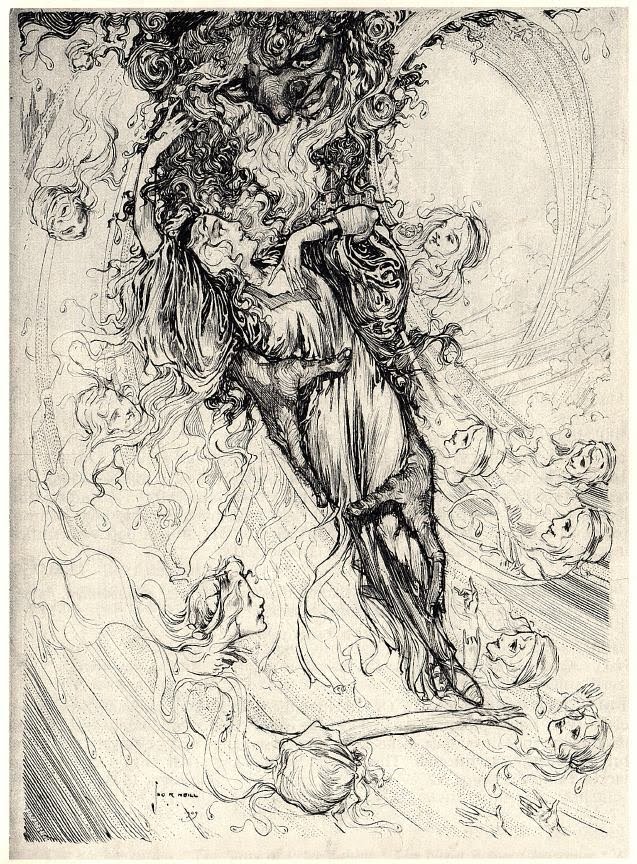
I haven't written here in about four months. My general rule is that I use this for posts that are more of a run-down of things I've done than examinations of a subject, although it's sometimes difficult to make the distinction. The thing is, I haven't done much worth talking about in the recent past. Yesterday, however, was an exception. John R. Neill's introduction to The Wonder City of Oz, the first Oz book he wrote as well as illustrated, says, "We live on the top of the Schooley Mountains and the Jenny Jump Mountains are really truly mountains right next to us. They are wonderful mountains for fairies to hide in." So I decided Beth and I should visit both places, as they're not that incredibly far away. We'd been meaning to go for a few weeks, but we'd had to put it off because of a recall on my car. But now the car has been deemed okay, so we made the trek yesterday. On the way, we stopped to eat at Panera Bread. I hadn't been to one since we lived in Secaucus, and I was annoyed by those commercials they had that referred to "clean food," as if every other restaurant serves filth. I mean, some do, but I figured that was the minority. But it's really not fair to let bad advertising sour me on something. I wouldn't have drunk Red Bull even if they didn't have those painfully unfunny ads. But anyway, Panera is one of those places where they don't tell you on the menu everything that's in each sandwich, which is frustrating when you're a picky eater. But they do now have flatbread pizzas, and the one I had was good.

I read online that the house Neill lived in from 1936 until his death in 1943 was at 94 Tinc Road in Flanders, New Jersey. That's a very narrow, windy road; but fortunately there's a sidewalk along the relevant part.

I wasn't sure whether the same house was still there, but this drawing from Neill's 1941 Christmas card definitely looks the same as the one I photographed.
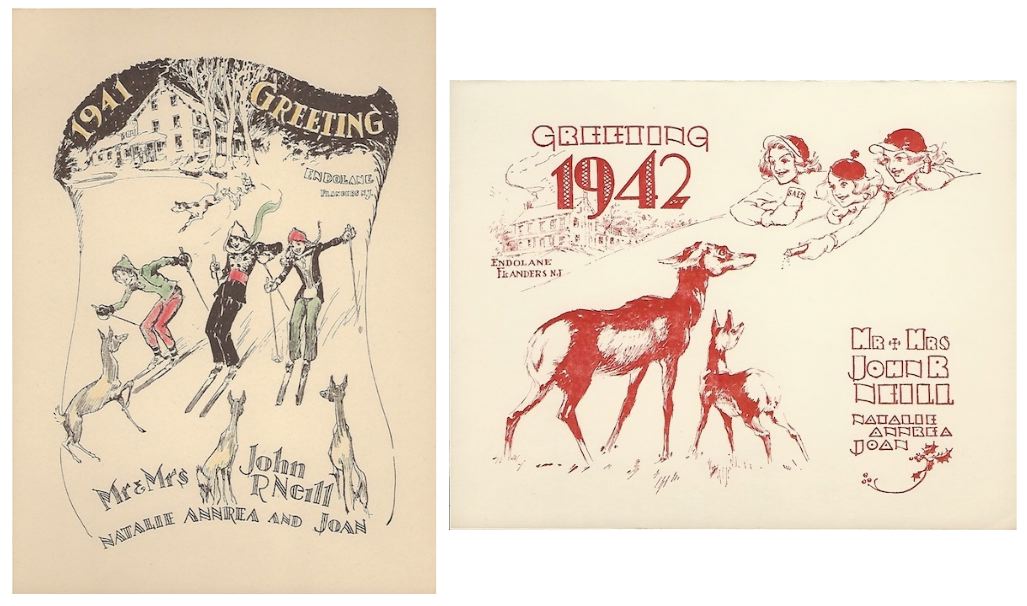
Picture source: Bill Campbell's Oz Enthusiast blog
I don't think the property is as big now as what the illustrator owned, though. Neill called the place Endolane, but I have no evidence that this name is still in use. When I looked at the Endolane tag on Instagram, most of it was for a farm in Rhode Island. The street that branches off from Tinc Road right near there is called Neill Lane after him.

It's spelled with only one L on this sign, but it kind of looks like they just ran out of room. Perhaps this is the lane with the farm at the end o' it that Neill's name referred to, but I can't say I have any idea what the street layout was all those decades ago. I've seen Ruth Plumly Thompson's house in Philadelphia before, and I don't think any of the places L. Frank Baum lived are still standing.

Jenny Jump is a state forest in the mountains with an address in Hope Township. Some sources I looked at say that there's one particular Jenny Jump Mountain, but I don't know which one this is. There are several trails through the forest. We walked the Swamp Trail (although neither of us saw a swamp) and then tried the Spring Trail, but when we realized there was a very steep, narrow, rocky incline not far from where it started, we gave up.

We then drove to the ominously named Ghost Lake on the even more ominous Shades of Death Road.

I can't say the part we drove on had any noticeable shades of death, although it did have a big sod farm. The scariest thing I saw in the area were Trump signs and those thin blue line flags. I'd seen those flags for some time before I knew what they were for, but even then they looked dystopian. Even putting aside the racism, why would anyone want to advocate for a police state? I guess it's not a surprise that a rural area would be largely Republican, which isn't to say that it makes sense. And it's not like I don't see some of that same stuff in Brooklyn. Anyway, Google Maps showed a place called Faery Cave next to the lake, but we couldn't find how to get there. According to the comments, the trail is pretty overgrown, and it's not really that interesting anyway. But it does bring to mind Neill's comment about fairies hiding in those mountains. I wonder if the cave had the same name back in his time. I didn't see any leprechauns there either.


In other news, I'd been going to the office two days a week, and working from home on the others. Starting next week, I'm going to be in the office three days every other week. I liked working from home, but my office was so reluctant to do that in the first place that I'm not surprised they're phasing it out as soon as possible. It's not even being in the office that bothers me so much as the necessary preparation and getting up an hour earlier. I also wish they'd waited until masks were no longer recommended indoors. Yeah, I know there are jobs that always require masks, but I'm not used to it, you know?
vovat: (wart)

Since I've had my mind on water monsters recently, I figured I might as well turn my attention to that pillar of cryptozoology, the Loch Ness Monster. I'm not entirely sure why Nessie would capture the public imagination more than any other monsters that conspiracy nuts claim to have seen, but it has, being right up there with Bigfoot. Nessiemania started in the early thirties, with the Inverness Courier publishing a supposed sighting of the creature in 1933. The following year was when the most famous picture of the monster, known as the Surgeon's Photo, was taken.

In 1994, it was revealed that this picture was a hoax, with its actual subject being a toy submarine with a sculpted head. A faked photograph doesn't necessarily mean that the monster isn't real, however, and some still hold on to the hope that it is. Really, though, how would a monster of that size get to a freshwater lake in Scotland, and continue to thrive there for years? Has it been the same creature the whole time? If not, doesn't that require a family of monsters? When you get down to it, it's an absurd conspiracy theory. But at least it's a FUN conspiracy theory, without the offensive nature of other such theories.

Whether stories of the monster predate the sightings in the thirties isn't entirely clear. There are a few older mentions of monsters in the area, beginning with the account of the sixth century monk St. Columba. Adomnán of Iona's account of this saint's deeds has him stopping a monster on the River Ness by making the sign of the cross. Some people have apparently also tried to tie Nessie to ancient stone carvings in the Scottish Highlands.

Nessie is commonly identified as a plesiosaur, although the pictures and reports of its lifting its head and neck out of the water make this pretty much impossible, even if some plesiosaurs DID miraculously survive into the modern era.

Some have linked the Loch Ness legends to those of kelpies, tricky shape-shifting water sprites from Scottish folklore. Traditionally, the kelpies would fool people by turning into horses and then drowning anyone who mounted them, but I suppose one could turn into a big plesiosaur-like monster as well. In fact, the Harry Potter tie-in Fantastic Beasts and Where to Find Them identifies Nessie as a kelpie.
vovat: (Polychrome)
Since I already wrote about Rainbow Brite today, I might as well keep the rainbow theme going with my weekly mythology post. In Greek mythology, the goddess of the rainbow is Iris, the daughter of the sea god Thaumas and the sky nymph Elektra. Like Hermes, she serves as a messenger for the gods, sometimes between themselves and other times with the mortal world. Some sources suggest she typically served as the personal messenger and herald for Hera, but Homer has her delivering several messages for Zeus. She is usually portrayed with wings, and is said to be married to Zephyrus, god of the west wind. In the Percy Jackson books, the children of the gods communicate via Iris-messages, which can be sent through any rainbow with an offering of money.


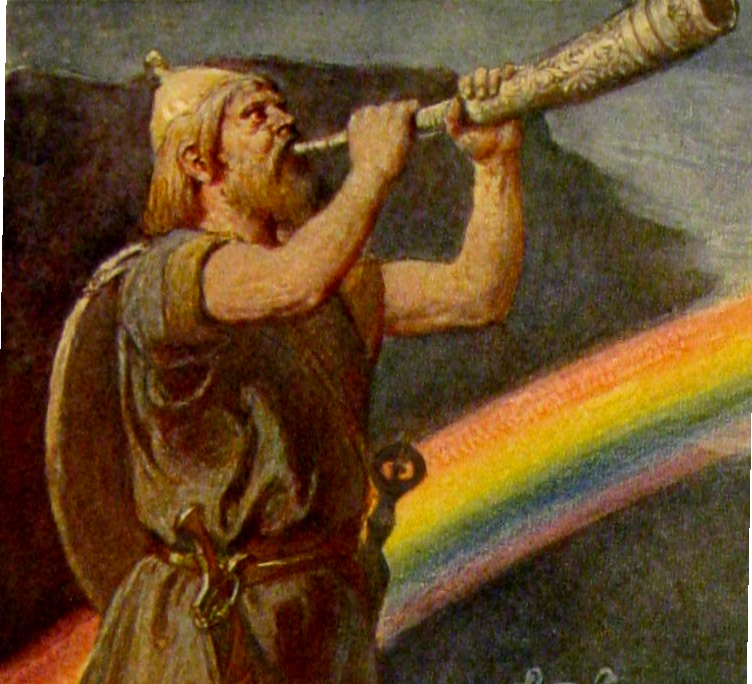
In Norse lore, the name for the rainbow is Bifröst, and it is used as a bridge between our own world of Midgard and the gods' abode in Asgard. The color red at the top is a burning flame, which prevents the frost giants from crossing it. The guardian of Bifröst is Heimdall, son of Odin, who keeps constant watch over the world. During Ragnarok, the giants will finally manage to cross over the rainbow bridge, and it will shatter with their weight. There's apparently a school of thought maintaining that the bridge between Earth and Heaven was originally thought to be the Milky Way rather than the rainbow, but common association still identifies Bifröst with the colorful arch.


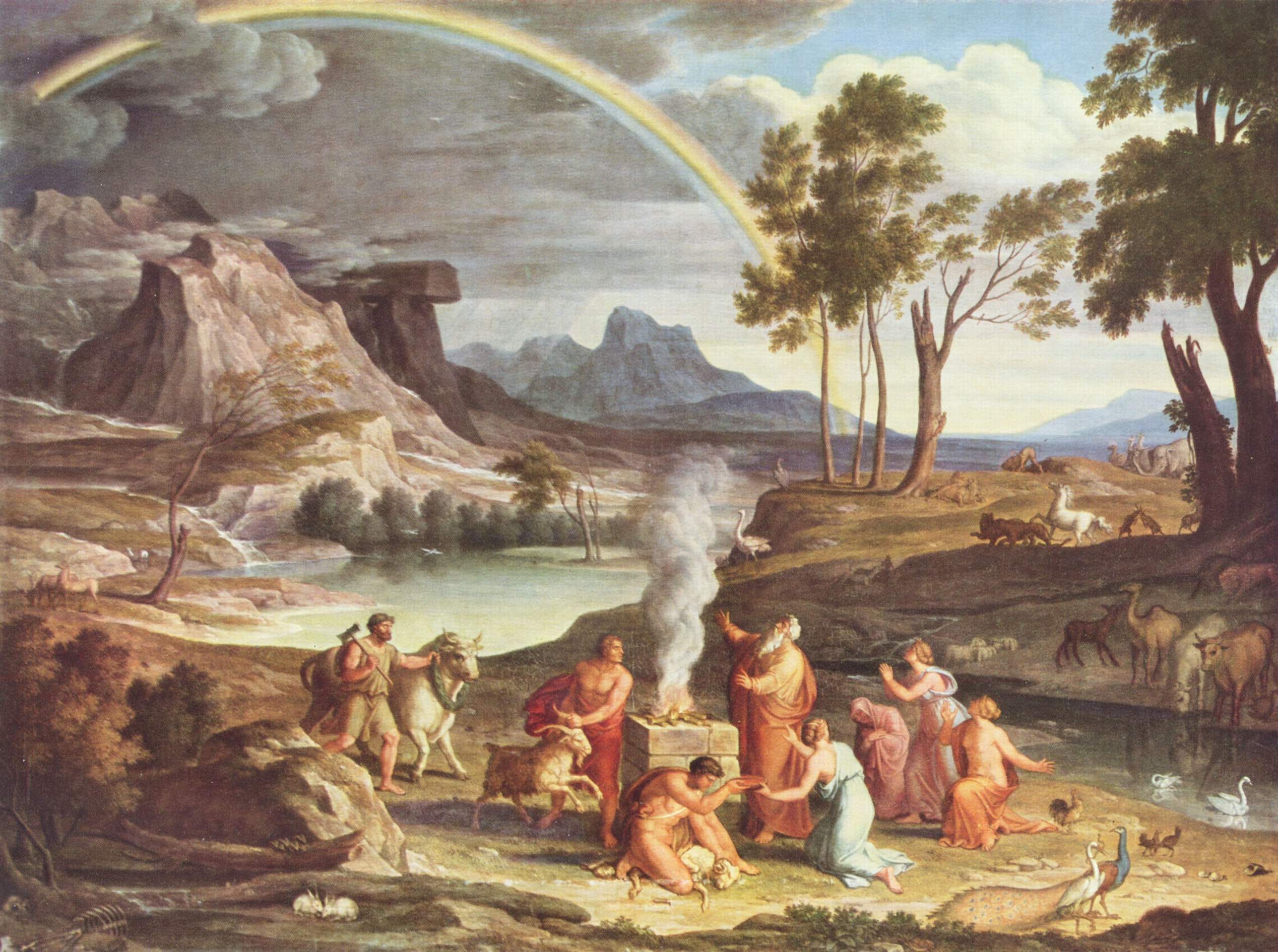
The rainbow is also featured in the Biblical book of Genesis. After the great flood (you know, Noah's Ark and all that), God placed the rainbow in the sky as a sign that He'd never flood the entire world again. It's a good thing we have the rainbow, then, because otherwise He'd probably be causing worldwide floods every other week. The big guy must have memory problems, but that's not surprising for someone His age.


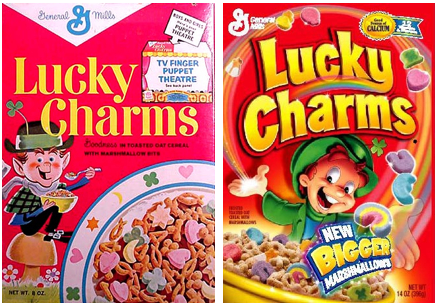
So what about the pot of gold at the end of the rainbow? I'm not sure exactly how that started, but it seems to have originated in Europe, and is especially identified with Ireland. One possible origin is a story about a leprechaun who grants a wish to a poor couple, and when they wish for riches, he tells them that their prize is at the end of the rainbow. Since it's impossible to get there, they never actually get the money, which is the leprechaun's punishment to the couple for their greed. This page says that some versions of the legend say that only a naked man can claim the gold, which sounds like it could be another leprechaun trick. The identification of leprechauns and pots of gold with rainbows is now so culturally ubiquitous that it can safely be referenced in children's cereal commercials.
vovat: (Minotaur)

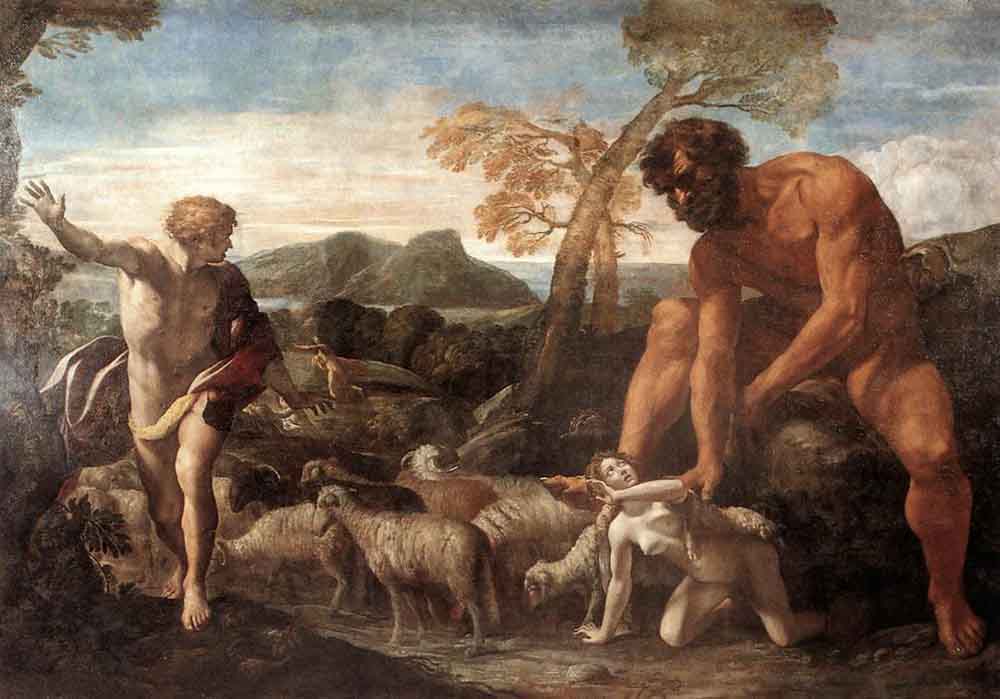
If I were to refer to a giant, you'd have a pretty good idea what I mean, right? Or would you? While giants are all big and humanoid, they vary in a lot of ways. Some are only slightly larger than normal humans, while others are truly huge. Goliath's height is given in different versions of the Bible as "four cubits and a span" (about six and a half feet) and "six cubits and a span" (about nine and a half feet). The Nephilim are said in the Book of Enoch to be 300 cubits (about 450 feet) in height. The Gigantes and Hecatonchires were presumably large enough to move mountains. Most of the Norse Jotun didn't seem to be much bigger than humans or Aesir, but their ruler Utgard-Loki had a glove that Thor and his companions mistook for a building, and the primordial giant Ymir must have been planet-sized. When a creature can vary from eight feet tall to positively Himalayan, they're probably not all the same species, are they? Then again, using scientific terminology for beings that couldn't really exist, as the Square-Cube Law means a human frame that big would collapse instantly, might not be the best idea.


So what about ogres? As far as fairy tales go, I don't know that there's a whole lot of difference between giants and ogres. Well, that's not entirely true. It's more that there doesn't HAVE to be a difference. A large being that's basically humanoid but with grotesque features that eats regular-sized humans could be called either a giant or an ogre. The thing is, however, that some giants of mythology and folklore are friendly, helpful, intelligent, and even beautiful. Ogres pretty much HAVE to be mean, ugly, and dim-witted, or they wouldn't be ogres. I guess they could be considered a subset of giants that are less human than their fellows. The Wikipedia page says that the term dates back to twelfth-century French, and gives several possible derivations.


There is, perhaps, even more confusion over trolls. These creatures of Norse mythology are often more or less interchangeable with giants and ogres, but other traditions say that they are essentially human-sized dwellers of forests and underground caves. Trolls are generally considered to have magical powers, and in some parts of Scandinavia, the stories told about them were similar to ones about fairies in other parts of Europe. Modern popular culture still provides several different takes on trolls. The Scandinavian folk tale of the Three Billy-Goats Gruff makes its troll a ravenous creature that lives under a bridge and is easily fooled, which would make it not all that different from your typical ogre. But we also can't forget the troll dolls that gained popularity in the early sixties and have enjoyed occasional resurgences since then. I remember them being big in the mid-nineties, when I was in high school. These trolls are hardly ogrish brutes, but instead cute creatures with brightly-colored hair. Tolkien's trolls are large and uncouth humanoids that turn to stone in the daylight, a trait that he probably took from tales of the Norse dwarves. Terry Pratchett's Discworld series expands upon this idea of Tolkien's by having trolls made of rock, and saying that they freeze up in the daylight because they can't handle the heat. Their silicon-based brains are similar in operation to computers, so trolls in warmer areas tend not to be very bright. Sunscreen and devices like the cooling helmet Sergeant Detritus wears have enabled trolls to function more smoothly in cities. Oh, and for what it's worth, the term "troll" for an Internet agitator presumably comes not from the monsters but from the fishing term, although it works pretty well with both definitions.
vovat: (Polychrome)

Since I've recently talked about Rainbow Brite and rainbow-related classical mythology, I pretty much feel obligated to discuss Polychrome, the Daughter of the Rainbow in the Oz series. I've mentioned her a few times, and of course she's in one of my icons, but I don't think I've done an entire post about her yet. [livejournal.com profile] bethje is always comparing her to Rainbow Brite, but while the cartoon character had an important job to do, Polychrome and her sisters really don't seem to have much to do beyond dancing. Still, Polly (as her friends call her) definitely increases in competence throughout the books, even if most of her actual growth is offstage. When she first shows up in The Road to Oz, she's presented as a beautiful and fragile creature totally out of her element. She accidentally danced off the end of the rainbow onto the ground, and she soon meets up with Dorothy's Oz-bound party. She's constantly in motion, and prefers to eat ethereal foods like dewdrops and mist-cakes. When she tries human food, she enjoys it, but eats only a very tiny bit ("about as much as a fly would eat," according to Dorothy). Polychrome dresses in robes that shine with all the colors of the rainbow, and while this is never specified in L. Frank Baum's text, John R. Neill consistently draws her with a skullcap.


When Polychrome returns for a brief appearance in Sky Island, she's hardly helpless, and instead assists the earthly visitors by arguing law with the Pinkies. Maybe her increased confidence has something to do with her being in her element (i.e., the sky), but it also seems like she's gained more practical knowledge.


The rainbow fairy's next role is in Tik-Tok, which reuses the plot device of her being stuck on the ground when the rainbow fades away. Oddly enough, when she meets the Shaggy Man, one of her companions in Road, she doesn't seem to recognize him at all. There's been much speculation on this point, with the generally accepted Oz-as-literature explanation being that this was a result of Baum's carelessness in adapting his play The Tik-Tok Man of Oz (which wasn't entirely consistent with the books, although it used many of the same characters) into novel form. Perhaps the best Oz-as-history explanation is that Polychrome was too upset to recognize Shaggy at first, but March Laumer's Careless Kangaroo contains a much more convoluted explanation about how she was in love with Shaggy, and decided to have her memories of him wiped out when it was obvious he didn't return her affection. This book also has her studying at the Wogglebug's college, which explains her increased intelligence in books after Road. An interesting aspect to Tik-Tok is that the Nome King seems to have a crush on Polychrome, although it's possible that he's bluffing.


The Daughter of the Rainbow shows up again in Tin Woodman, in which she's caught by the giantess Mrs. Yoop and transformed into a canary, and the Tin Woodman's party has to help her escape from Yoop Castle. Despite her foolishness in being caught, Polychrome is quite competent during this adventure, even while in canary form. She performs magic on several occasions, which is definitely a change from how she claimed not to know any magic back in Road.


The later canonical authors never gave Polychrome another prominent role, but they did seem to like her anyway, having her make cameo appearances from time to time. She assists characters in using the rainbow itself to reach Oz in Ruth Plumly Thompson's Grampa and Purple Prince, as well as Neill's Lucky Bucky. She and Kabumpo recognize each other in Purple Prince, and Wonder City has an episode in which Polly and Number Nine know each other from playing together on rainy days, so it's pretty much inevitable that the fairy made other unrecorded visits to Oz. I've seen rumors that Polly was a major character in Jack Snow's unpublished manuscript Over the Rainbow to Oz, but since this story has yet to turn up, there's no confirming that.


What exactly being "Daughter of the Rainbow" entails is never clearly specified. Polychrome refers several times to the rainbow itself as her father, but doesn't mention a mother. Both Marcus Mebes' Lurline and the White Ravens and a story in the most recent Oziana link the colorful fairy to Greek mythology by identifying her mother as Iris. Her uncle, as confirmed several times, is the Rain King. Gina Wickwar's contest-winning Hidden Prince features appearances by Polychrome and her uncle, as well as Paddy O'Paint, the leprechaun in charge of touching up the rainbow. Her also mentions another leprechaun named Kelly, who keeps the pot of gold at the rainbow's end.
vovat: (Santa)
While L. Frank Baum's mythology either replaced or subverted a fair amount of the classical stuff, he did reuse some popular legendary characters, mostly ones who had become ingrained in popular culture. Santa Claus and Jack Frost are two of the most obvious, but there were a few others as well. One is Father Time, who plays a major role in one of Baum's American Fairy Tales, aptly titled "The Capture of Father Time." In this tale, a young cowboy named Jim ropes Time with a lasso, which results in time being stopped entirely until Jim releases the old man. Jim takes advantage of his situation to play several pranks, an idea that would appear in other stories about time stopping or slowing down. Father Time appears in his traditional guise, with a long beard, bald head, hourglass, and scythe. He explains that, whenever he swings his scythe, a mortal dies. Contrary to rumor, however, he doesn't fly, but instead takes his time. While the American Fairy Tales aren't directly linked to the Oz universe, some of them contain connections, so I tend to think of them as part of the same world. And perhaps I'm not the only one, as Father Time also shows up in Jeremy Steadman's Time in Oz. He actually dies during a complicated plot to unravel time, and is succeeded by his son Timano. I'm currently reading Ruth Plumly Thompson's Wonder Book, and I noticed that she used Father Time as a character in a short play.


While Baum's conception of Father Time is associated with death due to his life-ending scythe, the Spirit of Death actually makes an appearance in The Life and Adventures of Santa Claus. It's a small role, consisting simply of Death hovering over Claus's bed and then angrily leaving when the immortals show up with the Mantle of Immortality. There's no physical description of Death, but Baum writes of the spirit as female. While the Grim Reaper personification is generally thought of as male, Death in Slavic lore is a woman in a white robe, which is pretty close to what Mary Cowles Clark draws in her illustration of this scene. Her Death actually wears a gray robe, though, to fit in with the somber tone of the picture. Also, while I've never read Neil Gaiman's Sandman series, I know that his Death is also female, but a younger and more attractive female.


Speaking of the Sandman, he also has a place in the Oz universe. I don't know that Baum himself ever specifically used the character, but he did name the Sleep Fays as a type of immortal in Life and Adventures. According to the description of their king, he "carried a wand from the end of which a fine dust fell all around, so that no mortal could keep awake long enough to see him, as mortal eyes were sure to close in sleep as soon as the dust filled them." The idea of sleep being a result of sand or dust in a person's eyes makes me wonder what happens when a person falls half-asleep, or only sleeps for a few seconds. Does the Sandman just graze them? Anyway, the Sandman appears under his own name (well, title, anyway) in Thompson's Kabumpo in Oz. When Ozma's palace is temporarily perched on top of the giant Ruggedo's head, the Sandman mistakes it for a dream castle, and attempts to jump through it. He hits a window setting and spills his sand, putting everyone in the castle to sleep, except the few inhabitants who never slept. He then goes to tell the story to his wife, and Peg Amy later reports that she'd heard the Sandman lived near there. How she would know this isn't clear, but since Ruggedo and the palace are in Ev at the time, it's not at all unlikely that the Sandman's home is the nearby Kingdom of Dreams. This mysterious location is displayed on the map on the Tik-Tok endpapers, but never explored in the Famous Forty. In Gnome King, Scraps and Peter Brown come across the Sandman's Nap Sack in a pile of items for mending in the castle of Patch, and it turns out to put anyone wearing it to sleep. The Sandman doesn't actually appear, but perhaps he dropped off the sack for repairs. Our sleep-inducing friend shows up again personally in Jane Albright's short story "A Christmas Tree for Dorothy" (a Santa/Christmas Oz story that I forgot about when writing this post), and reveals to the Scarecrow and Tin Woodman that the Wizard of Oz had supplied him with a magic mistake bag to prevent more accidents of the sort in Kabumpo. I suppose the Sandman would count as one of Baum's Sleep Fays, but whether he's the king or a lower-ranking member of the band isn't clear.

Finally, while I already mentioned that Thompson's The Curious Cruise of Captain Santa isn't identified as an Oz-universe story, I suppose it's close enough that I can mention a character from classical mythology who makes an appearance in it. This is none other than Neptune, King of the Deep, who's portrayed as an old man with long green whiskers. Although not described in the text, John R. Neill also gives him his traditional trident. Thompson's version of Neptune is a rather eccentric man who lives in an undersea dwelling with a water place and smokes a water pipe. When Santa drops down his sea chimney and pays him a visit, he gives the sea king some gumdrops and a harmonica, which Neptune happily uses to play sea tunes.
vovat: (Polychrome)

With Christmas on its way, I figured an appropriate subject for an Oz post would be elves. Baum used the term a few times, but it was largely just interchangeable with other terms for immortal beings. Queen Zixi of Ix refers to the fairies of Burzee as elves at one point, and Ozma does the same for the Nomes in The Emerald City of Oz. Interestingly, Tolkien initially referred to his Deep Elves as gnomes, although I think he eventually dropped that association. The Life and Adventures of Santa Claus has Light Elves, and its Sound Imps are changed to Sound Elves in The Enchanted Island of Yew. Perhaps the most significant elven character in Baum's universe, however, was actually introduced by Ruth Plumly Thompson. In Handy Mandy in Oz, we meet Himself the Elf, who is also sometimes referred to as a dwarf or a gnome (although he's obviously not the same kind of creature as the Nome King, who also shows up in this book). He's under the command of the silver hammer previously owned by Wunchie the Witch, and when summoned, he must do whatever the bearer of the hammer commands. His powers are apparently quite formidable, as the Wizard of Wutz regards the hammer as the second most powerful magic talisman in Oz, after the Magic Belt.


Details on Himself are a bit sketchy. We're told by Thompson that he has a purple beard, and Neill gives him dragonfly wings. The only possible indication I can find in the text for the wings is that he's described as "[f]lying along for a moment beside" Handy Mandy, Nox the Ox, and King Kerry on their trip to the Emerald City; but I think it's really just artistic license. The elf lives in a tree stump, and seems to have a certain degree of autonomy, as shown when he merely knocks Nox (when he was still named Boz) unconscious, rather than killing him as per Wunchie's instructions. Wunchie and Himself both appear in Melody Grandy's The Disenchanted Princess of Oz, and Melody draws the elf quite differently from Neill's depiction.

Himself shows up yet again in Atticus Gannaway's The Silver Sorceress of Oz, which features Sonora, the creator of the silver hammer. I've started writing a story that explains how Himself came to be the slave of the hammer, but I haven't made much progress on it in the past few years. My back burner is overloaded, especially with unfinished Oz stories.
vovat: (Polychrome)

As I mentioned in my last proper post, belief in elementals has persisted over the centuries, and one philosophical system that included such belief was Theosophy, an occult movement founded by Helena Petrovna Blavatsky in the late nineteenth century. So what, exactly, did Theosophists believe? Well, I can't be entirely sure, as Blavatsky and her followers were apparently fond of the typical occult trick of making things seem mystical by writing about them in convoluted ways. At its heart, it seems to be a syncretic belief that all religions contain some truth, and many different cultures had Adepts who were skilled at discerning spiritual truths about the universe. It incorporates elements from many different religions, as well as folklore and philosophy. The great chain of being, multiple lives of souls, history being cyclical, and humans evolving from weird proto-human creatures were all parts of Theosophy; as were the lost continents of Atlantis, Lemuria, and Hyperborea. In other words, it was sort of a catch-all with some new ideas added in. Blavatsky believed in the consciousness of the entire universe, and the elementals were basically the conscious spiritual forms of various natural forces. She wrote, "Under the general designation of fairies, and fays, these spirits of the elements appear in the myths, fables, traditions, or poetry of all nations, ancient and modern. Their names are legion--peris, devs, djins, sylvans, satyrs, fauns, elves, dwarfs, trolls, norns, nisses, kobolds, brownies, necks, stromkarls, undines, nixies, goblins, ponkes, banshees, kelpies, pixies, moss people, good people, good neighbours, wild women, men of peace, white ladies--and many more. They have been seen, feared, blessed, banned, and invoked in every quarter of the globe and in every age. Shall we then concede that all who have met them were hallucinated?" Yeah, pretty much the same basic argument that the alien astronaut theorists use. "A lot of people have reported seeing kind of similar creatures, and you can't prove they AREN'T real!" It doesn't hold a lot of water (or undines, for that matter) when you get right down to it, but I can see the appeal.


One known member of the Theosophical Society was none other than my favorite author, L. Frank Baum, which is largely why this kind of thing interests me in the first place. There have been some studies on how Theosophical beliefs affected Baum's writing, with this page detailing some of them. Honestly, I think most of the references are more subtle than people like the compiler of said page prefer to think, but there are some significant similarities. Baum refers to Adepts in Glinda of Oz, and to the ancient Greek idea of demons being spiritual guides in The Master Key. And yes, the idea of elementals appears here and there as well, most prominently in Baum's own Nomes, described as "rock fairies" and "underground elves." The idea of underground creatures capturing humans, as occurred in many of Baum's own Nome stories (the royal family of Ev in Ozma, the Shaggy Man's brother in Tik-Tok, the King and Queen of Pingaree in Rinkitink), is a common one in fantasy, what with gnomes kidnapping a human girl in Zauberlinda the Wise Witch (a book that owes much of its style to The Wonderful Wizard of Oz, and which Baum himself quite possibly borrowed from in turn) and George MacDonald's princess-napping goblins. Still, I think the idea that Nomes are the keepers of rocks and gems ties Baum's creations in with the elemental concept. One of the first mentions of the Gnome King (Baum hadn't yet changed the spelling at this point) was in The Life and Adventures of Santa Claus, in which he's one member of a council of immortals that watches over various aspects of nature. This council also includes the Queen of the Water Sprites and the King of the Wind Demons, and later books set in the same expanded universe bring in sea and sky fairies, the former being the mermaids of the book simply called The Sea Fairies, and the latter including the Daughter of the Rainbow. It doesn't seem like he really involved fire fairies all that much, though. I believe The Annotated Wizard of Oz suggested a connection between Tititi-Hoochoo's subjects from Tik-Tok and fire, presumably based on the fact that the ruler's title is the Great Jinjin, and jinn are associated with fire. Aside from one of the maidens attending the Queen of Light being named Firelight, however, I don't really see this. Also perhaps somewhat telling is that one of Button-Bright's many middle names is Paracelsus.


If I remember correctly, the nasty Wizard of Oz from Wicked was a direct follower of Blavatsky, and was perhaps intended to highlight some of the less palatable aspects of Theosophy. Gregory Maguire's Wizard rules Oz as a Hitler-like dictator, and the superiority of the Aryan race was espoused by Blavatsky. She did not advocate genocide, instead assuming that the Aryans would simply be favored by natural selection, but Theosophy was cited as an influence on the founders of the much more blatantly racist Ariosophy. Blavatsky's teachings included something about the Aryans originating on Atlantis and eventually being replaced themselves by the sixth root race, a far cry from gassing Jews in concentration camps. In other words, I guess you could say it was an example of RACIAL thinking, but not necessarily RACIST thinking. Still not good, of course, but I have to suspect from the admittedly little I've read about her that Blavatsky wouldn't have actually supported the Wizard's systematic persecution of talking animals.
vovat: (zoma)

This week, I thought it might be fun to look at elementals, which are basically nature spirits. Many cultures believed in such beings, but the most famous classification is probably that determined by the sixteenth century physician and alchemist Phillip von Hohenheim, better known as Paracelsus. He was a believer in the four classical elements as known in Greece, India, and Japan. These, of course, were earth, fire, air, and water. There was sometimes also a fifth element added to the mix, but contrary to what Ted Turner and Captain Planet might have told you, it wasn't "heart." Rather, Aristotle decided that the fifth element was aether, also known as quintessence, an immutable substance from which the gods and the heavens are made. In Japanese thought, the fifth element was known as Void. The Chinese had slightly different classical elements, counting metal and wood but not air. These elements have, throughout history, been linked to everything from planets to months of the year. Since the discovery of actual elements, however, it seems that the classical elements are typically viewed symbolically rather than literally. Some sources suggest that Paracelsus associated each of the classical elements with a real atomic element (carbon for earth, hydrogen for water, oxygen for air, and for some reason nitrogen for fire), and he also proposed intelligent beings dwelling in each of these elements. His names for such creatures came from mythology, although he sometimes changed details from older descriptions of nature spirits. Earth was ruled by the gnomes, diminutive dwarfs from European folklore. The term "gnome" might have been original with Paracelsus, and probably derives from the Latin and Greek for "earth-dweller," although it was commonly believed at one point that it was connected to the term for knowledge. Undines are water spirits, the term being the French name for mermaids. Some legends had it that an undine had no soul unless it married a mortal, an idea that showed up from time to time in post-Christian folklore. I guess the idea is that it gives humans a certain amount of superiority over traditional immortals, since they can go to Heaven while the minor deities are stuck on Earth forever. That also presumably means they can't go to Hell either, but I'm not sure the myth writers addressed that. Fire elementals are salamanders, the association likely coming from how salamanders would hibernate in logs and scurry out to escape when the logs were set ablaze, giving the impression to a casual observer that the flames created them. They were also thought to be able to withstand heat because of their moist skin. We now know such tales are no more true than the ostrich hiding its head in the sand, but since the idea of a fire lizard is still intriguing, some modern fantasists think of the elemental as a completely different animal than the amphibian of that name. The air elementals are sylphs, and don't have as many mythological associations, but are generally regarded to be quite similar to winged fairies.


The idea of elementals has stuck around through the ages, and a Google search reveals that they're fairly popular within the neopagan movement. They're also often associated with the occult, and mystical philosophies like Theosophy incorporate beliefs in such beings. And, not surprisingly, they've also made their way into fantasy. In the days to come, I hope to discuss the use of characters associated with the classical elements in the Oz books and the video game world, and perhaps other media as well.
vovat: (Bast)
Yesterday, [livejournal.com profile] vilajunkie alerted me to a kind of magical black cat that I had omitted from my recent post, the Cait Sith of the Scottish Highlands. From what I've seen, this is pronounced "cat shee," and hence has no connection to the Sith from Star Wars. Then again, I've read that a giant green rabbit is a significant character in the comics based on the franchise, so I suppose a feline Dark Lord wouldn't be out of place. But I digress. The Cait Sith is a fairy cat, distinguished from an ordinary black cat by its size and a white spot on its breast.


(Okay, maybe Reagan is too small to be a Cait Sith, but she DOES have the correct marking.)

The general consensus online seems to be that the Cait Sith could be dangerous and ferocious, but I can't find much about what they were actually thought to DO. But a few tidbits I was able to pick up included that the Cait Sith was sometimes thought to be a transformed witch, that some Scots also believed in a demonic cat called Big Ears that could be summoned by burning other cats, and that the canine equivalent is a typically silent green dog known as the Cu Sith. It seems that the legend of the fairy cats probably came from the Kellas Cats, Scottish hybrids between wildcats and domestic cats.


Nowadays, the name Cait Sith is more likely to be associated with a character from Final Fantasy VII, a robotic cat with a megaphone that rides around on an animated stuffed Moogle. It turns out that the cat is actually under the control of Reeve, head of Urban Development for the Shinra Corporation, who is operating as sort of a double agent. This Cait Sith differs from its namesake in that it has an entire white underbelly instead of simply one white spot, but it DOES sometimes speak with a Scottish accent. A few other Final Fantasy games have either a generic enemy or a summoned creature called Cait Sith. In the original English translation of Final Fantasy VI, the summoned Cait Sith was translated simply as "Stray."

vovat: (Polychrome)
Everyone knows what an elf is, right? Well, you probably think you do, but in truth you could have a very different idea from someone else. As I mentioned here, the traditional elves of Scandinavian mythology, the Elves of Middle-Earth, and Santa's diminutive and industrious helpers are actually pretty different. Traditionally, elves were essentially regarded as demigods, human in form but more attractive than normal people, and with connections to nature. Really, they probably aren't too different from nature spirits from other traditions. As with other mythological elements, it's probably a case of similar stories originating in different parts of the world, then being combined when the cultures come into contact with each other, and later fantasists picking and choosing from both the older and newer myths. If you're going for mythological authenticity, it appears that J.K. Rowling's house-elves are really more like hobgoblins or kobolds than traditional Scandinavian elves, and Santa's staff has more in common with dwarves than elves. Then again, the Norse dwarves, or dvergar, are often pretty much interchangeable with dark elves. They mine and forge (jobs that trolls and gnomes are also sometimes given), while the light elves are associated more closely with fertility. Really, it seems that the old Norse records are too contradictory and incomplete to really paint a clear picture of the earliest concepts of elves or dwarves. What we know comes more from later folklore, which portrays elves as mischievous and nasty. To writers like Spencer and Shakespeare, the terms "elf" and "fairy" were basically synonymous, and they were thought of as tiny creatures with human shapes.

While the concept of elves as miniature people with magic powers still lives on today in such forms as the Keebler Elves and Rice Krispies' tiny mascots, much of their role in modern fantasy literature derives, not surprisingly, from Tolkien. His elves reflected, in some ways, those of the earliest known Scandinavian sources, being noble, beautiful, human-sized, functionally immortal, and in tune with nature. They aren't petty and vindictive like the elves of folklore, but instead basically have an Übermensch role in Middle-Earth. Despite Tolkien's obvious prejudice in favor of his Elves, they do have their flaws, like their long-standing enmity with the Dwarves (and it's Tolkien who popularized that plural, although he didn't invent it; I personally prefer it to "dwarfs"). Was Middle-Earth the first fantasy world to show elves and dwarves as traditional enemies? If it was, it might have been based on the references to dwarves as "dark elves," and it's carried over into other universes that include both races. It's not always the case, however. In Dragon Quest III, it's necessary to give yourself the form of a dwarf in able to conduct business with the elves, as the two peoples are friendly. In the Discworld series, it's the dwarfs and trolls who are traditional enemies, although both groups also hate elves, who are glamorous but malicious beings in Terry Pratchett's world. Their glamor allows them a lot of power in harming humans, but dwarfs and trolls can see right through it.

I think Tolkien was also the first to devise the idea that male and female dwarves look the same to non-dwarves, which implies that the women also have beards. Pratchett ran with this concept in the Discworld books, using it for both humor and social commentary. Other fantasy worlds have made female dwarves more traditionally feminine in appearance, without the beards. Come to think of it, Disney's Dopey doesn't have a beard, so is he actually a woman? {g}
vovat: (Polychrome)

Happy birthday to everyone's favorite fictional monarch, Ozma of Oz! Okay, she might not be EVERYONE'S favorite. I would imagine, for instance, that King Arthur is more popular. Of course, whether he was real or not is still up for debate, but all the stuff about the sword in the stone and the Lady of the Lake was almost certainly fictional. Hey, do you think the Lady of the Lake might be related to Ozma?

Anyway, how do I know it's Ozma's birthday? Well, Dorothy says it's August near the beginning of The Road to Oz, and the King of Foxville later states that Ozma "is to celebrate her birthday on the twenty-first of this month." That assumes that Oz and the United States use the same calendar, something I'm not sure L. Frank Baum ever addressed, but Ruth Plumly Thompson and later authors did make references suggesting that such is the case. Ozma's birthday party is a central part of Road, which has visitors from many of Baum's other fantasies coming to the Emerald City to pay their respects to the ruler. We also see birthday celebrations for the princess in two other canonical books, Magic and Wonder City. The former bases much of its plot around Ozma's friends hunting for unusual presents for the fairy ruler. Ozma's birthday isn't that significant to the plot of the latter, and from what I've heard, it wasn't referenced at all in John R. Neill's original manuscript. He had Jenny Jump arrive in Oz in the Munchkin Country, while the published version has her land in the Emerald City during Ozma's birthday parade. Incidentally, since the Heelers attack during the new moon about a week later, we might be able to work out some specific dates for when the events of this story take place. The book was published in 1940, when the first new moon after 21 August was on 2 September. In the previous three years, they were on 13 September 1939, 25 August 1938, and 4 September 1937. The 1940 date would probably work out best with the events, although that probably means it would take place after Neill wrote it. Oh, well. I'm sure Neill and his editor didn't have such trivial matters in mind when planning out the story.
vovat: (Polychrome)


L. Frank Baum seemingly didn't think of Ozma as a fairy initially, but gradually bestowed this status upon her. I know The Emerald City of Oz mentions her fairy wand, and later books show her using fairy magic. In a conversation in Glinda, the Supreme Dictator of the Flatheads tells the Royal Ruler, "If you are really Princess Ozma of Oz...you are one of that band of fairies who, under Queen Lurline, made all Oz a Fairyland. I have heard that Lurline left one of her own fairies to rule Oz, and gave the fairy the name of Ozma." But if she's a fairy from Lurline's band, is she still the daughter of the last King of Oz? Jack Snow addressed this issue in Magical Mimics, in which Lurline left the baby fairy Ozma with the old and childless King Pastoria, intending that she inherit the throne. So Ozma is one of Lurline's fairies, and also Pastoria's legal adopted child.

There are still questions remaining, however. The first sentence of Chapter 22 of Magic reads, "It seems odd that a fairy should have a birthday, for fairies, they say, were born at the beginning of time and live forever." Both Kabumpo and Wishing Horse say that Ozma is a thousand years old. And Merry Go Round has Ozma recognizing the Unicorn of Halidom from when she lived in the fairy forest of Burzee. So did she spend centuries as a baby fairy before being taken to Oz? I guess that's possible, as we don't know how quickly fairies develop. Indeed, it's odd that an immortal race would even HAVE children, but Baum shows his immortals trying a lot of different things out of boredom. This brings us to a curious statement in Scarecrow, which says that Ozma was "[b]orn of a long line of Fairy Queens." Even if some fairies do choose to have children, why would there be any need for such a line if fairies never die? Sure, they could have abdicated or been enchanted, but even if this had happened to a few of them, would it have been the case for an entire "long line"? Perhaps these queens were not FULL fairies, but simply had some fairy blood. That wouldn't explain how Ozma herself is apparently a full fairy, however. Perhaps we'll just have to accept that not all of the legends about the Queen of Oz are true, regardless of whether the Royal Historians reported them as such.

Throughout the course of the series, Ozma is given a few fairy relatives. In Tik-Tok, the Royal Gardener of the Rose Kingdom claims that a not-yet-picked princess "is named Ozga, as she is a distant cousin of Ozma of Oz." Betsy Bobbin and the Shaggy Man pick the princess, but as the roses want a male ruler, they drive Ozga out with the strangers. While she's a flower fairy in her own kingdom, she becomes mortal upon leaving. Eventually, she and Jo Files of Oogaboo fall in love, and she goes back to Oz with him. Actually, in the play on which the book Tik-Tok is based, the Rose Princess is named Ozma, but Baum obviously couldn't keep that name when he brought the character into the main series. The general belief is that the "ma" in "Ozma" came from Baum's wife's name Maud, the "ga" came from her maiden name, Gage. So how is a flower fairy related to Ozma of Oz? Baum never gave an explanation, but Melody Grandy did. In her Seven Blue Mountains trilogy, it's stated that the royalty of the Rose Kingdom are descended from a fairy named Omiarr, who was turned into a rosebush by an evil magician.


Another relative, Princess Ozana, is introduced in Magical Mimics. She is the Guardian of Oz, whose job is to keep the fairyland safe from the evil Mimics. While she initially keeps watch from the Mimics' own home at Mount Illuso, Ozma later transports her and her home to Story-Blossom Mountain in the Quadling Country. Oddly enough, the story of Lurline leaving Ozana at Illuso mentions the Guardian's "fairy wings," but she doesn't appear to have these when she actually shows up in the main story.
vovat: (Polychrome)
Continuing the fairy theme from last week, I'm sure you know that the rulers of the fairies in A Midsummer Night's Dream are Oberon and Titania. But what was Shakespeare's own source for these characters? Well, "Oberon" is a French variation on the Germanic name "Alberich," which translates as "king of the elves." Alberich was a dwarf (the difference between elves and dwarves wasn't as distinct as it would become in Tolkien's work) who showed up in the Niebelungenlied, which told the story of the legendary hero Siegfried, and would eventually provide the basis for Wagner's Ring Cycle. The first known literary appearance of the French version of the dwarf's name was in the thirteenth-century epic of Huon de Bordeaux, in which the elf is the diminutive son of Morgan le Fay and Julius Caesar. So the name had a significant history by the time Shakespeare used it for his own fairy king.

The name of Shakespeare's elvish queen, on the other hand, does not have the same literary background as her husband's. In fact, it was almost certainly the first time the name had been used for a fairy. Spencer's Faerie Queene (who, from what I've read, was an allegorical version of Queen Elizabeth I) was named Gloriana, and the Bard himself had made brief mention of a fairy queen named Mab in Romeo and Juliet (in the form of a speech by Mercutio). Shakespeare actually took the name "Titania" from Ovid's Metamorphoses, in which it referred to the descendants of Titans. Kind of an odd choice for a fairy queen, but some think that it was because of the similarity between the monarch and Diana, identified by Ovid as one of the Titania. Incidentally, because Saturn's moons are named after figures from classical Greco-Roman mythology and Uranus' after characters from Shakespeare and Alexander Pope, our solar system ended up with moons named both Titan and Titania.


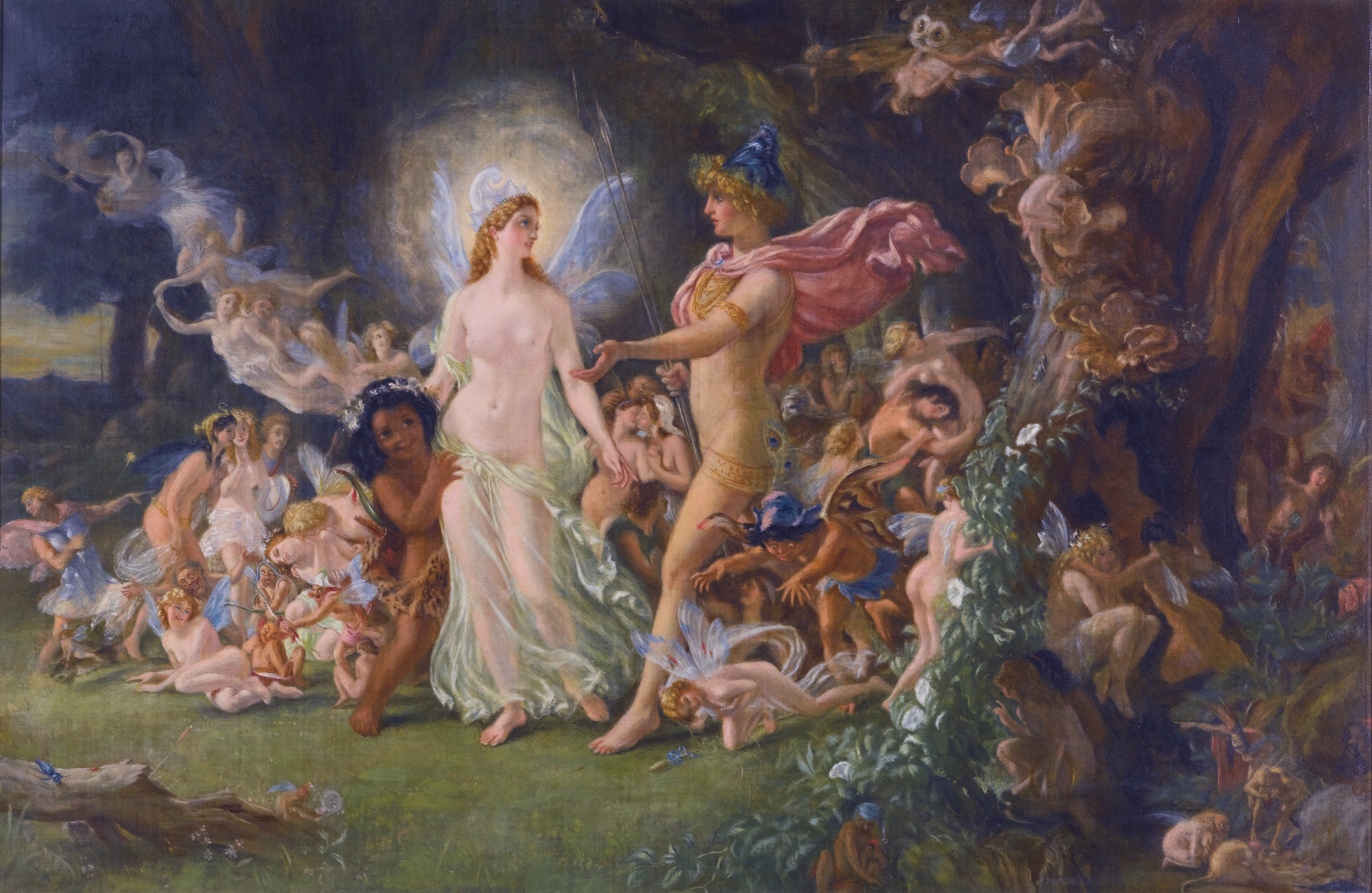
From this picture by Sir Joseph Noel Paton, we can tell that Oberon was known to don a party hat on occasion, while Titania regularly walked around topless. And I assume that dark-skinned kid with the pageboy haircut is Puck?
vovat: (Polychrome)
The date of Midsummer varies somewhat from one country to another, but in the United Kingdom and some other countries, it was the twenty-fourth of June. A few days off from the solstice, to be sure, but so was the Sol Invictus (and, hence, Christmas). Or maybe the solstice dates changed somewhat over the centuries? I think I've seen both explanations. Regardless, happy Midsummer's Day, or belated Midsummer's Day if you celebrated on the actual solstice! Which, this year, was also Father's Day, possibly leading to Oberon expecting TWO presents from each of his children.

Like most old pagan holidays with a large European following, Midsummer's Day was given a Christian makeover by the Church, becoming St. John the Baptist's Day. Not because John had any particular connection with summer (at least as far as I know), but because, according to the Gospel of Luke, Elizabeth was six months pregnant with John when Jesus was conceived. Hence, his birthday would have been six months before Jesus', which is celebrated at Christmas. See how it all works out, even though there's no evidence for Jesus having been born on Christmas, and the story of John's birth isn't supported by any of the other canonical Gospels? Anyway, the Wikipedia entry gives the impression that a lot of societies have combined old Midsummer traditions with celebrations of the baptizing saint. You know, sort of like how people still decorate trees for Christmas?
vovat: (Polychrome)
Well, summer is, as they say, icumen in. I believe the actual solstice is tomorrow, but I'm not sure it really matters in the modern United States, where businesses usually use Memorial Day as the beginning of the season. But for the English of the Middle Ages, the beginning of summer was May Day, and Midsummer's Eve was celebrated on the night of 23 June. This was the time that the fairies would meet, and of course fairies were an integral part of Shakespeare's A Midsummer Night's Dream. One of the most prominent fairies, whom I address in this post, is Puck, also known as Robin Goodfellow.


The term "puck" or "pooka" had been used for some time prior to the Bard's time to refer to mischievous fairies or devils, but Shakespeare's use of "Puck" to refer specifically to the name of this one particular fairy pretty much solidified the use of Puck as a proper name in popular culture. Within the play, he's the jester at Oberon's court. "Robin Goodfellow" is sort of a nickname, which most likely came from the tradition of not referring to fairies by their proper names, so as not to attract their attention. The euphemistic names usually included some reference to the fay as "good" or "fair," even though they were really often quite nasty, presumably so as not to get their dander up. Puck himself was held responsible for many acts of mischief, including changing his own form to deceive travellers, and making milk sour. He was also occasionally said to do helpful tasks, however, like sewing and housecleaning, and people would sometimes leave out milk for him. In such a role, he's basically a variation on all the stories of hobgoblins, kobolds, and other house-spirits who perform household tasks.

The legendary bandit Robin Hood (appropriate for a mention today, I suppose, seeing as how it's Errol Flynn's birthday) is sometimes viewed as a humanized version of Robin Goodfellow. Robin Hood doesn't have any magical powers, but he DOES live in the forest, dress in green, and have a sense of mischief. Wikipedia says that this is unlikely to have been the source of the outlaw's origins, but it's still an interesting thought.

December 2025

S M T W T F S
 123456
78910111213
14 151617181920
212223242526 27
28293031   

Syndicate

RSS Atom

Most Popular Tags

Style Credit

Expand Cut Tags

No cut tags
Page generated Jan. 4th, 2026 06:44 pm
Powered by Dreamwidth Studios