Prophecy and Predestination
Jan. 10th, 2010 01:15 pm![[personal profile]](https://www.dreamwidth.org/img/silk/identity/user.png) vovat
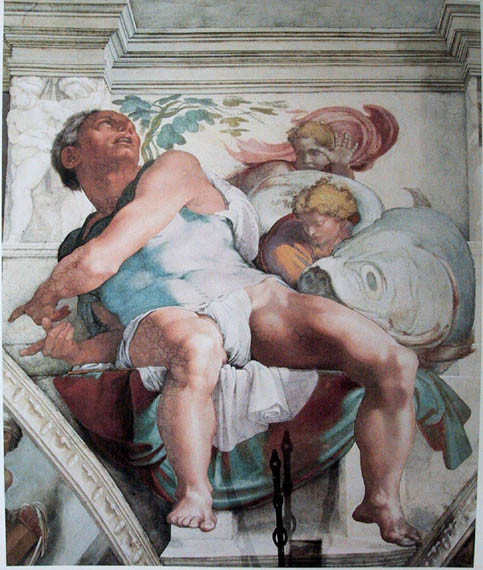
vovatAs I'm sure we all know, the Bible is full of prophecies that never came to pass. Apologists can really get their knickers in a knot trying to find excuses for these, including that the prophecies actually meant something other than what they literally say, or that they have yet to be fulfilled. One explanation I've found that actually seems to be more internally consistent, however, is that the prophecies are really warnings, and can always be prevented if the people shape up. A good example of this is in the Book of Jonah, in which the prophet tells the people of Nineveh that the city will be overthrown in forty days. The citizens repent, however, and God spares them. It seems pretty obvious that this story was never intended to be regarded as literally true, not least of all because the historical Jonah (if 2 Kings 14:25 is to be believed, anyway) lived at a time when Nineveh was still a small village. And even at its height, why would its inhabitants have believed a prophet from a religion that they didn't follow? I do think, however, that Jonah was meant as an illustration of how God operates. While the Bible is rarely consistent on any matter, it does give the impression that the ancient Jews weren't as fatalistic as other contemporary societies. They might well have had some concept of destiny, but for the most part the future is not written in stone, and God can change His mind depending on mortal behavior.
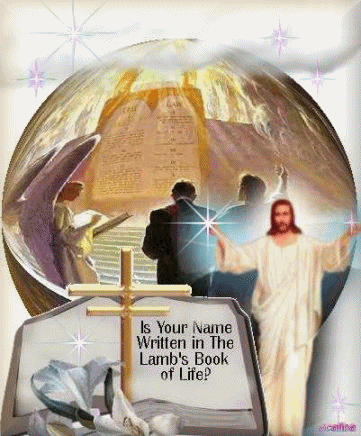
Now, the New Testament, which contains heavy Greek influence for obvious reasons, we might see some more hints of future events being predetermined and unchangeable. I'm not going to look through the entire Testament for references for and against that idea right now, but one that does come to mind is in Revelation 13, in which we're told that the names of the saved were written in the Book of Life "from the foundation of the world." Well, that's one possible reading, anyway, and the one that the Protestant denominations that believe in predestination apparently choose to accept. Whether you're going on to salvation or burning in the lake of fire is something that's been decided since long before you were born, which kind of makes me wonder why God would bother making people whom He knows He's just going to destroy eventually anyway. I suppose the question of whether or not people have free will is purely philosophical and academic, since even if we don't, we operate under the illusion that we do. So, in essence, whether or not the doctrine of predestination is true is essentially irrelevant to how a person lives his or her life. I would imagine, however, that believers in that doctrine pretty much always accept the idea of God as someone with a personality and emotions, by which token the whole idea of unchangeable fate seems cruel and pointless. That's quite likely why ancient Greek religion had the Fates operate independently of the gods.
Now, the New Testament, which contains heavy Greek influence for obvious reasons, we might see some more hints of future events being predetermined and unchangeable. I'm not going to look through the entire Testament for references for and against that idea right now, but one that does come to mind is in Revelation 13, in which we're told that the names of the saved were written in the Book of Life "from the foundation of the world." Well, that's one possible reading, anyway, and the one that the Protestant denominations that believe in predestination apparently choose to accept. Whether you're going on to salvation or burning in the lake of fire is something that's been decided since long before you were born, which kind of makes me wonder why God would bother making people whom He knows He's just going to destroy eventually anyway. I suppose the question of whether or not people have free will is purely philosophical and academic, since even if we don't, we operate under the illusion that we do. So, in essence, whether or not the doctrine of predestination is true is essentially irrelevant to how a person lives his or her life. I would imagine, however, that believers in that doctrine pretty much always accept the idea of God as someone with a personality and emotions, by which token the whole idea of unchangeable fate seems cruel and pointless. That's quite likely why ancient Greek religion had the Fates operate independently of the gods.


