The Heavenly Host with the Most
Sep. 26th, 2009 01:53 pm![[personal profile]](https://www.dreamwidth.org/img/silk/identity/user.png) vovat
vovat
As per
![[livejournal.com profile]](https://www.dreamwidth.org/img/external/lj-userinfo.gif) rockinlibrarian's request, today I'm taking a look at angels. Everyone has heard of angels, but just what ARE they? Well, the earliest Biblical references portray them as basically messengers of God, and in fact the term "angel" is based on the Greek translation of the Hebrew term for "messenger." I forget where I read it, but I remember seeing a mention that one difference between the theorized Elohist and Yahwist authors is that, while Yahweh generally shows up to talk to his creations in person, Elohim tends to operate through messengers. The Bible also mentions "sons of God," as in the tale of the Nephilim and the framing story of Job, and these are also usually regarded as angels. Daniel, a book commonly dated to the second century BC, refers to two angels by name (Gabriel and Michael), and makes references to angels as heavenly princes representing different nations, with Michael being the guardian of Israel. Sources from around this time were more likely to give specific functions and identities to angels, bringing Raphael and Uriel in as other named messengers, and introducing the concept of Satan (sometimes called Azazel, presumably after the enigmatic figure mentioned in Leviticus 16 as the recipient of a goat during Yom Kippur) as a fallen angel. I think it's also around this time that angels came to be associated with stars and planets. Christianity incorporated many of these Jewish ideas about angels, and both of the named angels from Daniel reappear in the New Testament, Gabriel as the herald who predicts the births of both Jesus and John the Baptist in the Book of Luke, and Michael as the heavenly war leader who casts Satan to Earth in Revelation. The latter book also incorporates the idea of angels being charged with specific tasks, perhaps somewhat akin to demigods or minor deities in polytheistic religions.
rockinlibrarian's request, today I'm taking a look at angels. Everyone has heard of angels, but just what ARE they? Well, the earliest Biblical references portray them as basically messengers of God, and in fact the term "angel" is based on the Greek translation of the Hebrew term for "messenger." I forget where I read it, but I remember seeing a mention that one difference between the theorized Elohist and Yahwist authors is that, while Yahweh generally shows up to talk to his creations in person, Elohim tends to operate through messengers. The Bible also mentions "sons of God," as in the tale of the Nephilim and the framing story of Job, and these are also usually regarded as angels. Daniel, a book commonly dated to the second century BC, refers to two angels by name (Gabriel and Michael), and makes references to angels as heavenly princes representing different nations, with Michael being the guardian of Israel. Sources from around this time were more likely to give specific functions and identities to angels, bringing Raphael and Uriel in as other named messengers, and introducing the concept of Satan (sometimes called Azazel, presumably after the enigmatic figure mentioned in Leviticus 16 as the recipient of a goat during Yom Kippur) as a fallen angel. I think it's also around this time that angels came to be associated with stars and planets. Christianity incorporated many of these Jewish ideas about angels, and both of the named angels from Daniel reappear in the New Testament, Gabriel as the herald who predicts the births of both Jesus and John the Baptist in the Book of Luke, and Michael as the heavenly war leader who casts Satan to Earth in Revelation. The latter book also incorporates the idea of angels being charged with specific tasks, perhaps somewhat akin to demigods or minor deities in polytheistic religions.

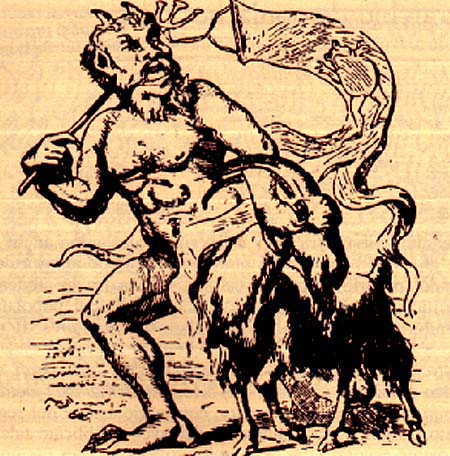
So how did the Jewish concept of angels change over time? Obviously the details aren't entirely known, but it is quite likely that the Jews took some ideas from the Persians, who conquered the Babylonians and allowed Judea and its temple to be restored. The change in the view of Satan from a divine prosecuting attorney to the source of all evil, for instance, might well have roots in the Zoroastrian concept of the light god Ahura Mazda being locked in eternal combat with the dark god Angra Mainyu. Zoroastrian scripture also referred to the Yazatas, heavenly beings who came to be associated both with days of the calendar and specific natural features and tasks. While these beings would probably be minor gods in pagan religions, and even the term "Yazata" signifies that these Zoroastrian angels were probably worshipped, the monotheistic Jews saw them as servants of the one and only God.
The idea of a hierarchy of angels most likely began in Judaism in the later BC years, and was developed even further by early Christians. The lists of angelic ranks aren't consistent, and I'm not sure where the Church Fathers came up with such ranks as Dominions, Virtues, and Powers. Both Jews and Christians, however, retroactively added other heavenly beings mentioned (or at least inferred) in the scriptures to the ranks of angels, those being the Cherubim, Seraphim, and Ophanim. Cherubim are winged creatures with features of humans, lions, oxen, and eagles. They bear some resemblance to sphinxes and other composite mythological beings that are said to have been employed as guards, and not only are Cherubim represented in art as attendants at God's throne, but they are also set by God to keep humans out of the Garden of Eden. In one of the Psalms, there's a reference to a Cherub being used as a battle mount by Yahweh. The confusion of Cherubim with Putti seems to have arisen around the Baroque period, but I'm not sure how this came about. Seraphim, as referenced in Isaiah, are six-winged beings that fly above God's throne; while Ophanim are the many-eyed wheels that support the throne in Ezekiel and Daniel. I'm not sure it was ever specified whether these bizarre forms are authentic or merely how these powerful beings show themselves to mere mortals, but I would imagine that not too many people today believe that some angels are literal wheels.


In Islam, angels are formed from light, and while humans (made of dirt) and jinn (made of fire) both have free will, the angels do not. Iblis, the Islamic equivalent of Satan, is mentioned in the Quran and other literature as both a jinn AND an angel. While this is confusing, I suspect that the reason for it is that Muhammad used the idea of Iblis rebelling against God, and such a thing would obviously require free will. So if Iblis is a jinn who was promoted to the ranks of angels, it would explain how he could be the one self-willed angel in the bunch.

The idea of angels has survived into the present, and might be experiencing a revival in fiction. Like many other mythological beings, however, it's not entirely clear what an angel really is, giving some leeway to writers. Are angels physical or ethereal in form? Can they actually dance on pinheads? If angels are asexual, as they're generally portrayed and as Jesus himself stated, what's with the story of the Nephilim? The idea of individual guardian angels most likely comes from Greek philosophy, and might well also have some roots in the national angels of Daniel. I'm not sure where the idea of angels as the spirits of dead people, as seen in numerous cartoons, originates. Jesus compares the spirits of the dead in Heaven to angels in that they're asexual and don't marry, but doesn't actually say they'll BECOME angels. Enoch is said by some sources to have become the angel Metatron, but it's commonly believed that he ascended bodily into Heaven, and hence never really died. The idea definitely predates animation, however, because Joseph Smith used it in Mormonism, not only giving an account of the earthly life of the guiding angel Moroni, but regarding Michael and Gabriel as posthumous forms of Adam and Noah, respectively. According to Wikipedia, dead people becoming angels also features in Bahá'í, another religion originating in the nineteenth century.


