![[personal profile]](https://www.dreamwidth.org/img/silk/identity/user.png)
A Post Mostly About Ghosts
Oct. 31st, 2009 12:26 pmHappy Halloween to all my readers! I've always liked Halloween, what with the dressing up and all the images. The candy never thrilled me quite as much as it apparently does other kids, and I eventually reached the point where I preferred to stay home and hand out candy instead of going out and begging for it myself. I'm not sure what I'm going to do this year, although I do think ![[livejournal.com profile]](https://www.dreamwidth.org/img/external/lj-userinfo.gif) bethje and I are going out to eat at some point.
bethje and I are going out to eat at some point.

The origins of Halloween tie in with the widespread idea that at least some dead people are still hanging around, usually in a non-corporeal form. This idea is an ancient one found in many cultures. The Romans performed sacrifices in honor of the Manes, who were the spirits of dead loved ones. Ancestor worship is also a concept that's seen throughout the world. This all ties in with the idea of the soul. But what exactly is a soul? Even today, the idea is pretty vague, yet a large number of people believe in them. Essentially, the belief is that a spirit version of a person, with the same personality and sometimes even the same appearance, lives on in some way. Considering that consciousness seems to be connected to the physical brain, I really can't see the soul idea as being much more than wishful thinking. I can understand the desire for it, though, as I do find the idea that death totally ends everything to be somewhat disturbing. Perhaps to some people, even an afterlife of eternal torment would be preferable to nothing at all. And there's the whole reward and punishment issue, but I won't get into that right now. Anyway, from what I've seen, it looks like the Egyptian Book of the Dead regards people in the afterlife as having physical bodies that are essentially the same as the ones they had in life, which is probably why preserving the corpse was so important. You wouldn't want to hang out in the underworld as a mere skeleton, would you? Well, actually, that sounds kind of cool. Greek mythology has the underworld inhabited by shades, existing in shadow and despair. These shades still maintained personalities, though, and they could be summoned and consulted by magicians.

While a bleak existence for the spirits of the dead was the general belief in many cultures, this was often coupled with the idea that the truly virtuous would be spared this fate. Most dead people in Greek mythology end up in the boring Plains of Asphodel, but some would be allowed into the Elysian Fields. The noble warriors among the Vikings would end up in Valhalla instead of Niflheim. Elijah was carried bodily into Heaven on a chariot when his time on Earth had ended. Along with this, there's the belief that the truly BAD end up punished for eternity, or at least long enough to learn their lesson. The Greek Tartarus, where Sisyphus was forever pushing a boulder up a hill and Tantalus wasn't able to get his hands on any food or water, was a major influence on the Christian version of Hell. Many of the tales of torments pretty much require that there's some physical component to the soul. After all, why would Tantalus have been tantalized at all if he was merely a non-corporeal being who had no need of sustenance? The typical image of fire and brimstone accompanied by demons poking pitchforks into people's butts becomes much less effective if the dead have no nerves. I believe some concepts of the soul also thought it was physically manifested as breath, which I guess is where the idea that sneezing can let your soul escape originates. So is a ghost or spirit a physical being or merely some form of energy? I'm not sure anyone really knows.
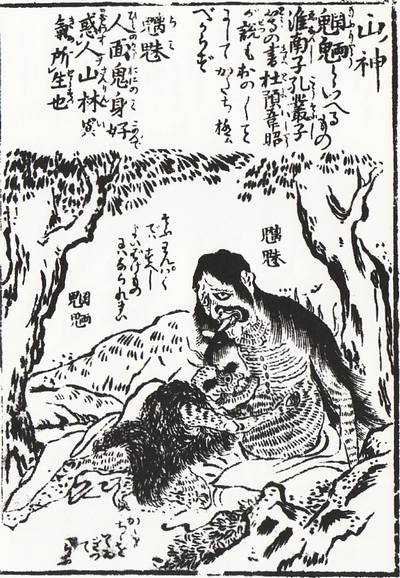
Since ghosts are often thought to live a bleak existence, it's not too surprising that they'd envy the living. And a lot of tales of haunted houses and the like basically consist of the dead being jerks to any living people who happen to come around. One popular variation is that of the poltergeist, which is essentially a spirit that can move physical objects around. Irish folklore includes the idea of the fetch, a ghost of a person who's still alive. Seeing a fetch is often thought to be a harbinger of one's own death, but there are variations on the theme.

Oh, and happy birthday todoktor_x! I've always thought it would be kind of cool to have a Halloween birthday, but what do I know?
bethje and I are going out to eat at some point.The origins of Halloween tie in with the widespread idea that at least some dead people are still hanging around, usually in a non-corporeal form. This idea is an ancient one found in many cultures. The Romans performed sacrifices in honor of the Manes, who were the spirits of dead loved ones. Ancestor worship is also a concept that's seen throughout the world. This all ties in with the idea of the soul. But what exactly is a soul? Even today, the idea is pretty vague, yet a large number of people believe in them. Essentially, the belief is that a spirit version of a person, with the same personality and sometimes even the same appearance, lives on in some way. Considering that consciousness seems to be connected to the physical brain, I really can't see the soul idea as being much more than wishful thinking. I can understand the desire for it, though, as I do find the idea that death totally ends everything to be somewhat disturbing. Perhaps to some people, even an afterlife of eternal torment would be preferable to nothing at all. And there's the whole reward and punishment issue, but I won't get into that right now. Anyway, from what I've seen, it looks like the Egyptian Book of the Dead regards people in the afterlife as having physical bodies that are essentially the same as the ones they had in life, which is probably why preserving the corpse was so important. You wouldn't want to hang out in the underworld as a mere skeleton, would you? Well, actually, that sounds kind of cool. Greek mythology has the underworld inhabited by shades, existing in shadow and despair. These shades still maintained personalities, though, and they could be summoned and consulted by magicians.
While a bleak existence for the spirits of the dead was the general belief in many cultures, this was often coupled with the idea that the truly virtuous would be spared this fate. Most dead people in Greek mythology end up in the boring Plains of Asphodel, but some would be allowed into the Elysian Fields. The noble warriors among the Vikings would end up in Valhalla instead of Niflheim. Elijah was carried bodily into Heaven on a chariot when his time on Earth had ended. Along with this, there's the belief that the truly BAD end up punished for eternity, or at least long enough to learn their lesson. The Greek Tartarus, where Sisyphus was forever pushing a boulder up a hill and Tantalus wasn't able to get his hands on any food or water, was a major influence on the Christian version of Hell. Many of the tales of torments pretty much require that there's some physical component to the soul. After all, why would Tantalus have been tantalized at all if he was merely a non-corporeal being who had no need of sustenance? The typical image of fire and brimstone accompanied by demons poking pitchforks into people's butts becomes much less effective if the dead have no nerves. I believe some concepts of the soul also thought it was physically manifested as breath, which I guess is where the idea that sneezing can let your soul escape originates. So is a ghost or spirit a physical being or merely some form of energy? I'm not sure anyone really knows.
Since ghosts are often thought to live a bleak existence, it's not too surprising that they'd envy the living. And a lot of tales of haunted houses and the like basically consist of the dead being jerks to any living people who happen to come around. One popular variation is that of the poltergeist, which is essentially a spirit that can move physical objects around. Irish folklore includes the idea of the fetch, a ghost of a person who's still alive. Seeing a fetch is often thought to be a harbinger of one's own death, but there are variations on the theme.
Oh, and happy birthday to
doktor_x! I've always thought it would be kind of cool to have a Halloween birthday, but what do I know?
